Blog

  • Do Animals Have Emotions? What Researchers Have Actually Found

    Do Animals Have Emotions? What Researchers Have Actually Found

    From laughing rats to grieving elephants, here is what science really says about the inner lives of animals, and where the evidence is still being debated.

    If you have ever shared your home with a cat, a dog, or a parrot, you probably already have an opinion on this question. Perhaps your dog seems to light up when you come home. Perhaps your cat sulks when you change her food. Perhaps you have watched a mother goat call anxiously for a kid that wandered off, and felt sure that she was worried.

    But feelings are tricky. We cannot ask an animal how it feels. We cannot give a buffalo a questionnaire or ask a crow to rate its mood from one to ten. So how can anyone know whether animals truly have emotions, or whether we are simply seeing ourselves in their faces?

    This guide is written for curious beginners. We will look at what scientists actually mean by “emotion,” what kinds of evidence they use, which animals have been studied, and which questions are still open. You will not need any background in biology. Our goal is to give you a clear, honest picture, one that respects both the evidence and its limits.

    First, What Is an Emotion?

    In everyday talk, we use words like “emotion” and “feeling” as if they mean the same thing. Researchers often separate them.

    An emotion is a built-in reaction of the brain and body to something important. If a snake appears on your path, your heart speeds up, your muscles tense, and your attention narrows. This reaction happens quickly and mostly automatically. It helps you survive.

    A feeling is the conscious experience of that reaction, the “what it is like” to be afraid. This is the harder part for science to measure, because feelings are private. You know what fear feels like to you, but you cannot directly see inside another person’s mind, let alone an animal’s.

    So when researchers ask whether animals have emotions, they are really asking two questions:

    1. Do animals have the brain and body systems that produce emotional reactions?
    2. Do animals also consciously feel those reactions in some way?

    The first question has a strong answer. The second is more difficult, but a growing body of evidence suggests that many animals do have some form of felt experience.

    A Short History: From Darwin to Today

    The idea that animals have emotions is not new. In 1872, Charles Darwin published a book called The Expression of the Emotions in Man and Animals. He argued that humans and other animals share emotional expressions because we share a common evolutionary history. A snarling dog and an angry person, he noted, show surprisingly similar signals.

    For much of the twentieth century, however, many scientists took the opposite view. Some believed that animals were best studied as machines that respond to rewards and punishments, and that talking about their feelings was unscientific guesswork. Anyone who described an animal as “happy” or “sad” was accused of “anthropomorphism,” meaning the mistake of projecting human traits onto non-human creatures.

    That attitude has changed dramatically. Brain research, behavioural experiments, and decades of careful observation have shifted the conversation. In 2012, a group of neuroscientists signed the Cambridge Declaration on Consciousness, stating that many non-human animals, including all mammals and birds and some other creatures such as octopuses, have the brain structures needed for conscious states. More recently, in 2024, a group of researchers endorsed the New York Declaration on Animal Consciousness, which said there is strong scientific support for conscious experience in mammals and birds, and at least a realistic possibility of it in all vertebrates and many invertebrates. These statements are not final proof, but they show how seriously the scientific community now takes the question.

    The Evidence: How Do We Know?

    Because animals cannot describe their feelings in words, researchers rely on several lines of evidence. Each has limits, but together they build a stronger case.

    1. Shared brain structures and chemicals

    Mammals share many of the same emotional circuits in the brain, including regions such as the amygdala, which is involved in fear and threat, and areas linked with reward and bonding. The chemicals that carry messages in these circuits, including dopamine, serotonin, and oxytocin, are also remarkably similar across species.

    Birds have a different brain layout from mammals, but research suggests that parts of their brains perform similar jobs. This is one reason scientists now take bird emotions seriously.

    The neuroscientist Jaak Panksepp spent his career mapping emotional systems in mammal brains. He proposed that animals share basic emotional systems such as seeking (curiosity and anticipation), fear, rage, care, separation distress or panic, and play. His ideas are still debated, but they have been very influential.

    2. Behaviour

    Animals show a rich range of behaviour that looks emotional: approaching things they like, avoiding things they fear, comforting companions, playing, and showing distress when separated. Researchers study these behaviours carefully, often comparing them across many individuals so that one surprising story does not mislead them.

    3. Body signals

    Emotions change the body. Stress hormones rise, heart rate changes, and body temperature can shift. Scientists can measure these signals in many species to see how animals react to different situations, such as being handled, isolated, or reunited with a friend.

    4. Facial and vocal expressions

    Some animals have recognisable expressions linked with pain or distress. Researchers have developed “grimace scales” for mice, rats, rabbits, and horses, based on changes in the eyes, ears, and face that appear when the animal is in pain. Vocal sounds also carry information, from the whines of puppies to the calls of baby birds.

    5. Mood tests

    One clever method tests whether an animal’s mood changes how it interprets uncertain situations. People in a good mood tend to expect good things; people in a bad mood expect the worst. Researchers have used similar tests with animals, such as training them that one signal means a reward and another means something unpleasant, and then seeing how they respond to an in-between signal. Animals kept in poor conditions often respond more “pessimistically,” as if expecting bad outcomes. Studies of this kind have been done with rats, sheep, and even honey bees.

    Meet the Feeling Animals: Examples from the Research

    Rats that laugh and care

    It may sound surprising, but young rats make high-pitched chirping sounds, too high for humans to hear, when they play and when they are tickled by a researcher. They often seek out more tickling and approach the hand that did it. Scientists link these sounds to something like joy or playfulness.

    Rats also show care for others. In a well-known experiment, rats freed a cagemate trapped in a restrainer, even when they had access to chocolate as an alternative. Many shared the chocolate, too. While interpretations vary, the study is often cited as evidence of empathy-like behaviour.

    Dogs: our best-studied companions

    Dogs have lived with people for thousands of years, and they are tuned in to us. Studies show that dogs and owners looking into each other’s eyes can both experience a rise in oxytocin, a hormone linked with bonding. Brain-scan research suggests that dogs respond to human voices and emotions in ways similar to how humans do.

    But dogs also illustrate the importance of caution. Many owners are sure that their dog looks “guilty” after chewing a shoe. A study by the researcher Alexandra Horowitz found that the “guilty look” appeared mostly when owners scolded their dogs, whether or not the dog had done anything wrong. This suggests the look may reflect the dog’s reaction to our tone and posture, rather than a sense of guilt. The dog feels something, probably worry, but not necessarily what we assume.

    Elephants: memory and mourning

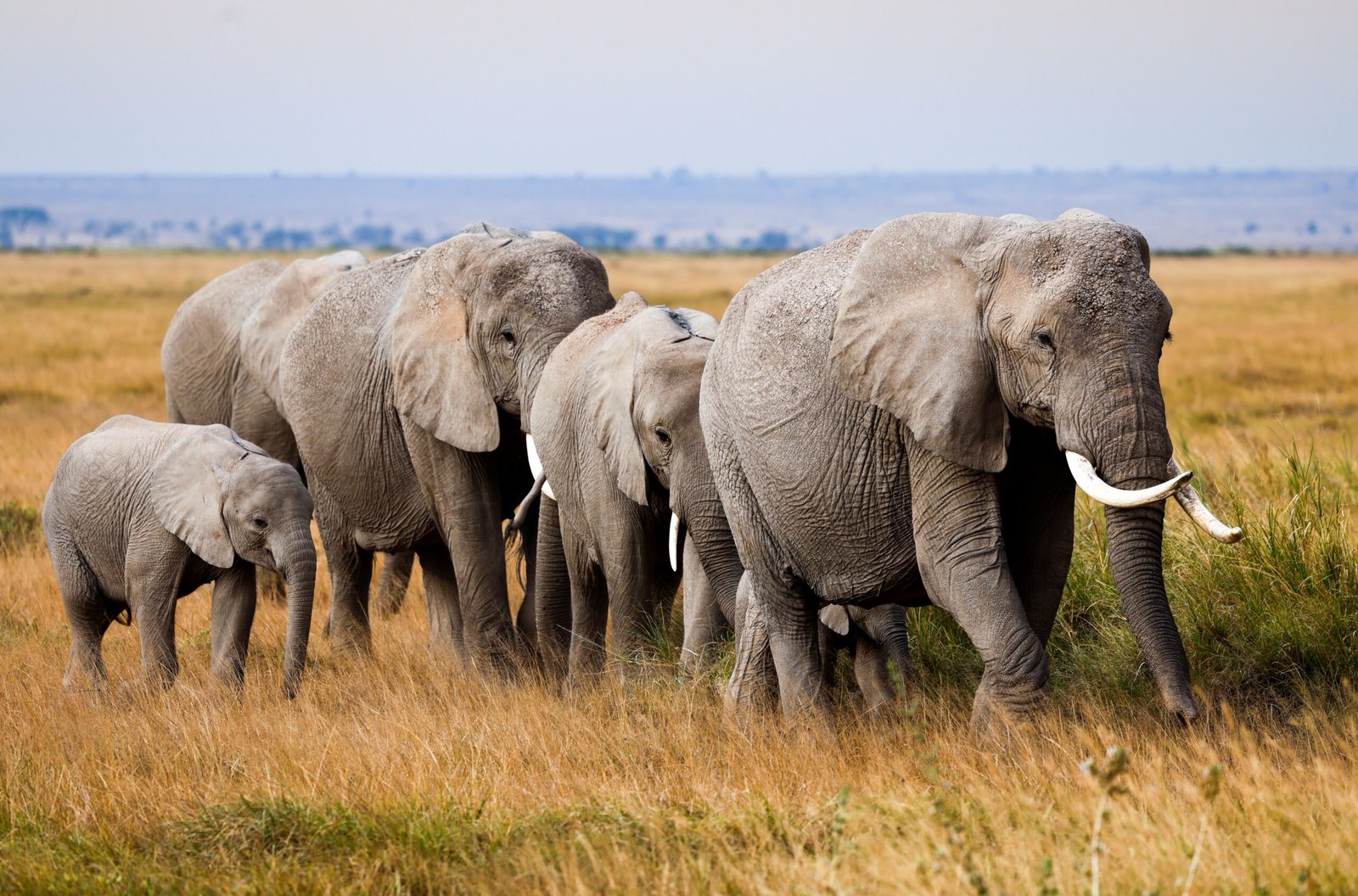
    Elephants live in close family groups led by older females, and they have long memories. Researchers and wildlife observers across Africa and Asia have documented elephants gently touching the bones of dead relatives, standing quietly beside a body, and even returning to the same place months or years later. Many scientists see this as behaviour consistent with grief, though it is hard to know exactly what the elephant is feeling.

    Chimpanzees and consolation

    Our closest relatives show behaviour that is easy for us to recognise. Primatologist Frans de Waal described how chimpanzees comfort a distressed neighbour by putting an arm around them after a fight. Jane Goodall recorded a young chimpanzee, Flint, who became withdrawn and seemed deeply affected after the death of his mother. In another well-known experiment, monkeys refused a perfectly good piece of cucumber after seeing a neighbour receive a grape for the same task, suggesting a sense of fairness.

    Orcas and grief

    In 2018, a female orca known as Tahlequah carried her dead newborn calf for about seventeen days across a vast distance in the Pacific Northwest. People around the world watched with sadness. While we cannot say exactly what she felt, many researchers regard it as a striking example of a mother’s bond.

    Crows and parrots

    Birds can be surprisingly emotional. Crows recognise individual human faces and can remember people who threatened them, sometimes teaching others to be wary. Parrots form deep pair bonds and can become distressed if they are lonely or bored. Many birds show play, including sliding down snowy roofs, which suggests they have a capacity for fun.

    Octopuses, fish, and bees

    The question becomes harder as we move further from humans. Octopuses have complex nervous systems and can solve puzzles, play with objects, and show different responses to pain. This evidence led the United Kingdom to recognise cephalopods such as octopuses, as well as crabs and lobsters, as sentient beings in its Animal Welfare (Sentience) Act of 2022.

    Fish respond to painful stimuli, avoid places linked with danger, and show stress when kept in poor conditions. Scientists debate how rich their inner lives are, but many now accept that fish are more than simple reflex machines.

    Even bees have surprised researchers. In one study, bees that were shaken to mimic a predator attack later behaved more “pessimistically” in tests. In another, bumblebees were observed rolling small wooden balls around with no reward, which some scientists described as a form of play. Whether this means insects have feelings is still hotly debated, and it is an area of active research.

    What About Complicated Emotions Like Guilt, Jealousy, and Love?

    Here is where the evidence gets more mixed. Basic emotions such as fear, anger, pleasure, and distress at separation are widely accepted in mammals and probably in birds. More complex emotions, such as guilt, shame, jealousy, and romantic love, are harder to test.

    Some studies suggest that dogs show jealous-like behaviour when their owner pays attention to a fake dog. Others argue that this may be simpler, such as competing for attention or a reaction to losing something valuable. Similarly, many animals form strong, lasting bonds, which we might call love, but we should be careful about assuming the experience is the same as human love.

    Scientists use two helpful terms here. Anthropomorphism means attributing human thoughts and feelings to animals without enough evidence. Anthropodenial, a term from Frans de Waal, means refusing to see any similarities between humans and animals, even when the evidence supports them. Good science tries to avoid both mistakes. The goal is to ask what an animal actually experiences, in its own way, rather than assuming it is either just like us or entirely different.

    A Local Angle: Animals in Our Own Lives

    In Pakistan, people live closely with animals every day: cats on rooftops, buffaloes and goats in village courtyards, donkeys and horses pulling carts, camels crossing the desert, and birds nesting in our trees. The science of animal emotion matters for all of them.

    The story of Kaavan, an elephant who spent many years at Islamabad’s Marghazar Zoo, drew attention across the world. Kaavan was often reported to be lonely and distressed after years of living in poor conditions, and after public campaigns he was moved in 2020 to a sanctuary in Cambodia, where he could be among other elephants. His story reminded many people that wild and social animals have needs that go beyond food and shelter.

    For working animals such as donkeys, horses, and bullocks, understanding their emotions can lead to better care. Animals that are overloaded, hit, or left without water do not only suffer physically. They experience stress and fear. Gentle handling, rest, shade, and clean water improve both their welfare and their ability to work.

    Even the street dogs and cats that we see every day react to kindness and cruelty. A dog that has been fed by the same person for months will often greet them with a wagging tail, and a cat that has been hurt may stay hidden for days. These small details show that individual animals have personal histories and relationships.

    Why Does This Matter?

    The question of animal emotions is not only a curiosity. It shapes how we treat the animals around us.

    • Animal welfare. If animals can feel fear, pain, boredom, and loneliness, then those feelings matter when we decide how to keep them on farms, in zoos, and as pets. Many welfare laws and guidelines are now based on this idea.
    • Better pet care. Understanding your pet’s emotional needs, such as play, company, and safe spaces, can make a real difference to its health and happiness.
    • Conservation. Wild animals live in families and social groups. Understanding their stress and bonds can help us design better rescue and protection programs.
    • Our own empathy. Learning about animal minds can deepen our sense of connection to the living world, and encourage kindness toward people and animals alike.

    How to Read Your Pet’s Emotions

    If you share your home with a pet, here are some gentle, practical tips. Remember that these are general guidelines, and every animal is an individual.

    1. Look at the whole body. For dogs, a loose, wiggly body usually means relaxed and friendly. A stiff body, tucked tail, or pinned-back ears can signal fear or stress.
    2. Remember that a wagging tail is not always happiness. The speed, height, and stiffness of the wag all matter, so look at the rest of the body, too.
    3. Watch the eyes and ears of cats. Slow blinking often signals comfort, while flattened ears, a swishing tail, or dilated pupils can mean fear or irritation.
    4. Notice changes. A sudden change in appetite, sleep, or behaviour can signal pain or distress. If you are concerned, speak to a vet.
    5. Offer choice and enrichment. Toys, walks, hiding places, and time with you help meet emotional needs.
    6. Be patient and positive. Reward-based training builds trust, while harsh punishment can create fear.
    7. Respect their signals. If an animal turns away, licks its lips repeatedly, or moves away, give it space.

    Common Myths About Animal Emotions

    Myth: Animals just act on instinct and feel nothing. Fact: Instinct plays a big part, but research shows that many animals also have emotional experiences that guide their choices.

    Myth: Only humans can feel pain or sadness. Fact: The brain systems for pain and distress are shared across many species, and animals show clear signs of both.

    Myth: If animals have emotions, they must be exactly like ours. Fact: Animals likely feel in ways that suit their own bodies, senses, and lives. A dog’s world, shaped by smell, is very different from ours.

    Myth: Scientists have settled the question completely. Fact: There is strong agreement for mammals and birds, and growing evidence for other groups, but important questions remain, especially for insects and other very different animals.

    A Few Quick Questions

    Do all animals have emotions? Scientists are most confident about mammals and birds. Evidence is growing for fish, reptiles, and some invertebrates such as octopuses, but the picture is less clear for simpler animals.

    Can animals cry from sadness? Some animals make distress calls or show behaviour that looks like grief, but crying emotional tears, as humans do, has not been clearly shown in other species.

    Do animals feel happy? Many animals show play, relaxation, and excitement, which researchers link with positive emotional states. Whether it is the same as human happiness is hard to know, but positive feelings seem very likely.

    Can animals sense our emotions? Dogs, horses, and some other animals are good at reading human voices, faces, and body language, and may respond to our mood. This is one reason animals can be so comforting.

    Final Thoughts: Looking at Animals with Fresh Eyes

    So, do animals have emotions? The most honest answer is that the evidence strongly suggests yes, at least for many of them. Animals share with us the brain systems, chemicals, and behaviours that underpin fear, joy, care, and distress. Yet we should remain humble, because we can never fully step inside another creature’s mind, and the science is still growing.

    Perhaps the most useful lesson is this: we do not need perfect proof to treat animals with kindness. When in doubt, it makes sense to give animals the benefit of the doubt, to watch them closely, and to learn how they communicate. Whether it is a loyal dog, a stray cat, a working donkey, or a wild bird in the garden, each one lives its own life, and each deserves our attention and care.

    The next time an animal looks into your eyes, take a moment to wonder what it may be feeling. Chances are, there is more going on in there than we ever imagined.
  • How Climate Change Is Changing Animal Habitats and Migration Patterns

    How Climate Change Is Changing Animal Habitats and Migration Patterns

    Animals are moving, adapting, and sometimes struggling as the planet warms. Here is what is happening, why it matters, and how every one of us can help.

    Every living thing has a place it calls home. For a polar bear, it is a platform of sea ice. For a coral, it is warm, clear, shallow water. For a barn swallow, it is a seasonal journey of thousands of kilometres between two continents. These homes and journeys have stayed fairly steady for thousands of years, and animals have evolved to fit them like a key fits a lock.

    Now the lock is changing. As the planet warms, habitats are shifting, seasons are arriving at different times, and many animals are being forced to move, adjust, or face serious risk. This is not a distant story that only affects Arctic wildlife. It is happening in oceans, forests, farmlands, and mountains around the world, including in Pakistan.

    If you are new to this topic, don’t worry. This guide explains the basics in plain language, gives clear examples, and ends with practical ideas you can act on. Our aim is to inform you, not to overwhelm you. There is real hope in this story, and there is plenty we can do.

    First, a Quick Refresher: What Is Climate Change?

    The Earth is wrapped in a layer of gases that trap some of the sun’s heat. This natural “greenhouse effect” keeps our planet warm enough for life. The problem is that burning coal, oil, and gas, along with cutting down forests and some farming practices, adds extra heat-trapping gases to the air. As a result, the planet has warmed by roughly 1.2°C compared with the late 1800s.

    That may sound small. After all, a few degrees of difference between one day and the next feels like nothing. But for the whole planet, a change of even one degree is huge. It is similar to your body temperature rising by a degree or two: you may not look different, but your whole system starts to feel the strain.

    Warming also does more than raise temperatures. It changes rainfall patterns, melts ice and glaciers, raises sea levels, and makes heatwaves, droughts, and floods more intense. All of these changes affect the places animals live and the signals they use to decide when to eat, breed, and travel.

    What Do We Mean by “Habitat” and “Migration”?

    Habitat is the natural home of an animal or plant. It includes everything the animal needs: food, water, shelter, and the right temperature. A frog’s habitat might be a pond edge with shade and insects. A markhor’s habitat is steep, rocky mountainside with grass and shrubs.

    Migration is a regular, seasonal journey that animals make, usually to find food, warmer weather, or safe places to breed. Birds flying south for winter, whales travelling between feeding and breeding grounds, and wildebeest following the rains across the African plains are all well-known examples.

    Both habitat and migration depend on a delicate balance. Plants must flower when insects emerge. Insects must emerge when birds arrive. Rivers must flow when fish are ready to spawn. Climate change can nudge any link in this chain out of step.

    Animals on the Move: Shifting Ranges

    One of the clearest signs of climate change is that many species are changing where they live. When an area becomes too warm, too dry, or otherwise unsuitable, animals that can move often do. Scientists have found that, on average, land species are shifting towards the poles and up mountain slopes in search of cooler conditions. Studies suggest that marine species are moving even faster, since ocean animals can swim to cooler waters more easily than land animals can walk.

    Here are a few examples:

    • Fish and sea life. In the Atlantic and Pacific, fish such as mackerel and cod have shifted their ranges towards colder waters. Fishing communities that relied on a particular species may now find it further away or gone altogether, which can affect food supplies and jobs.
    • Butterflies and insects. In parts of Europe and North America, many butterfly species have moved north or to higher altitudes over the past decades.
    • Mountain animals. The American pika, a small relative of the rabbit, lives in cool rocky slopes and can overheat in warm temperatures. Some pika populations have disappeared from lower, hotter areas and now survive only higher up.
    • Birds. Many birds in the Northern Hemisphere have shifted their winter ranges northward, and some now spend the cold months closer to their breeding areas.

    Moving sounds like a smart solution, and sometimes it is. But it only works if there is somewhere to go. A mountain species that has already climbed to the top has nowhere left to climb. A species living on a small island cannot easily walk away. And an animal that moves into a new area may not find the food, water, or shelter it needs, or may compete with species already living there.

    When the Calendar Goes Out of Sync

    Imagine a family dinner where the food is ready at 6 p.m., but the guests arrive at 8. By then the meal is cold. Something like this is happening in nature, and scientists call it a timing mismatch, or phenological mismatch.

    In many parts of the world, spring is arriving earlier. Trees leaf out sooner, flowers bloom earlier, and insects hatch ahead of schedule. But migratory birds often decide when to leave their winter homes based on cues like day length, which have not changed. As a result, some birds arrive at their breeding grounds after the peak of insect food has passed.

    A well-studied example involves small woodland birds in Europe, whose chicks need huge numbers of caterpillars. When the caterpillars hatch earlier because of warm springs, chicks may hatch after the best feeding period is over, and fewer survive. The birds are not doing anything wrong; the world around them is simply moving faster than their instincts.

    Similar mismatches can happen between flowers and pollinators, between fish and the plankton they feed on, and between hibernating animals and the weather outside. It is a reminder that nature runs on timing.

    The Oceans: Warming Waters and Bleaching Corals

    The oceans have absorbed most of the extra heat trapped by greenhouse gases, and marine animals are feeling it.

    Coral reefs. Corals live in partnership with tiny algae that give them food and colour. When the water gets too warm, the corals expel these algae and turn pale, an event called bleaching. A bleached coral is not necessarily dead, but it is starving and stressed, and if the heat lasts too long, it dies. Reefs such as Australia’s Great Barrier Reef have suffered repeated mass bleaching events in recent years. Because reefs shelter a huge variety of fish and other sea life, their loss affects millions of people who depend on them for food, tourism, and protection from storms.

    Sea turtles. For many sea turtles, the temperature of the sand decides whether eggs hatch as males or females: warmer sand produces more females. In some warm nesting beaches, scientists have found that the vast majority of young turtles are now female. If this continues, there may not be enough males in the future to keep populations healthy.

    Whales and fish. As ocean temperatures change, the tiny plants and animals at the bottom of the food chain move or shrink in number. Larger animals, from fish to whales, follow their food, which may change migration routes or timing.

    Ocean acidification. The ocean also absorbs carbon dioxide from the air, which makes seawater slightly more acidic. This makes it harder for shellfish, corals, and some tiny plankton to build their shells and skeletons.

    The Poles: Where the Change Is Fastest

    The Arctic is warming much faster than the global average, and the effects on wildlife are dramatic.

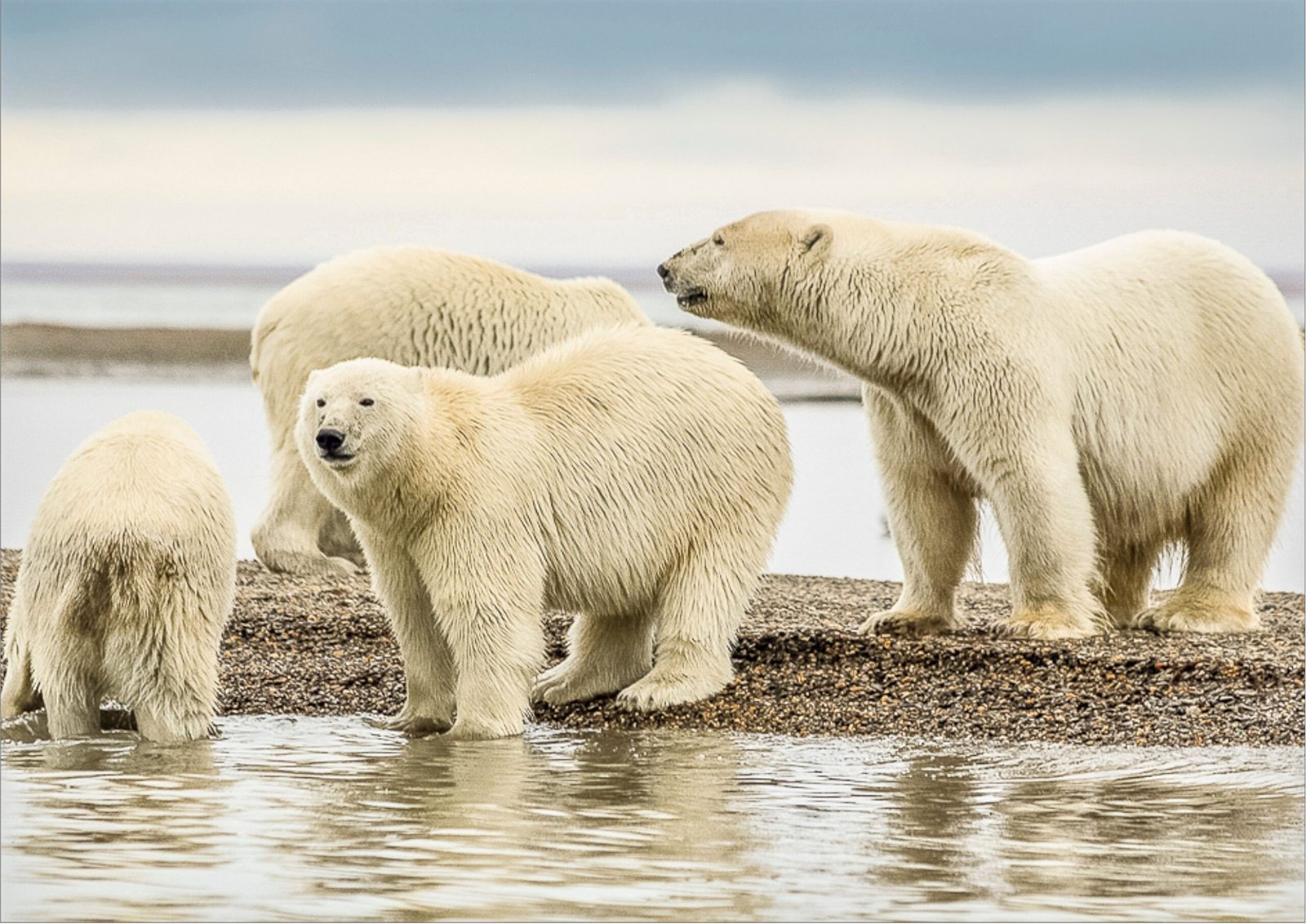
    Polar bears hunt seals from sea ice. When the ice melts earlier in spring and forms later in autumn, bears have less time to hunt and may spend longer on land with little to eat. Their bodies are built for ice, and they cannot easily switch to a different lifestyle.

    Walruses rest on ice between dives for clams. Without enough ice, they crowd onto beaches, where stampedes can be dangerous, especially for young calves.

    Penguins and Antarctic wildlife. In parts of Antarctica, warming and changes in sea ice affect krill, a tiny shrimp-like animal that is food for penguins, seals, and whales. Fewer krill can mean hungrier predators.

    It is important to remember that the poles are connected to the rest of the world. Melting ice raises sea levels, which affects coastal habitats and communities everywhere.

    Mountains and Glaciers: A Story Close to Home

    Pakistan is home to some of the highest mountains on Earth, and thousands of glaciers feed the Indus river system. Mountains are sometimes called “sentinels” of climate change because they react quickly to warming.

    For animals in the Himalaya, Karakoram, and Hindu Kush, there are several worries:

    • Shifting zones. As temperatures rise, forests and meadows may creep higher up the mountain, squeezing the cold, open habitats where animals like ibex, markhor, marmots, and snow leopards live.
    • Changing water. Glaciers and snowmelt feed rivers, lakes, and wetlands. Changes in melting patterns can lead to floods in some seasons and shortages in others, affecting both wildlife and people.
    • Pressure on prey. Shifts in pasture quality and snow cover can influence the animals that predators rely on for food. (If you want to learn more about one mountain species, our guide to the snow leopard is a great place to start.)
    • Glacial lake risks. Faster melting can create glacial lakes that sometimes burst suddenly and send floods downstream, damaging habitats and villages alike.

    Scientists are still studying exactly how different mountain ranges and animals will respond, and the picture is not the same everywhere. But there is wide agreement that high-altitude ecosystems are especially sensitive.

    Migratory Birds and the Indus Flyway

    Every year, huge numbers of birds travel along invisible highways in the sky called flyways. Pakistan lies along one of the world’s major routes, often called the Indus Flyway or part of the wider Central Asian Flyway. Each autumn and spring, many species such as cranes, ducks, geese, and waders pass through our wetlands, lakes, and coasts on their way between breeding areas in the north and wintering grounds in the south.

    These journeys depend on a chain of “stopover” sites where birds rest and refuel. Climate change can disturb this chain in several ways:

    • Wetlands may dry up during droughts or heatwaves.
    • Extreme floods can destroy nesting and feeding areas.
    • Warmer weather can change the timing of insect and plant growth along the route.
    • Storms and unusual weather can make long flights more dangerous.

    Some birds are adapting by shifting their routes or timing, or by shortening their trips. A few species that once migrated long distances now stay in milder areas year-round. But not all species can adapt fast enough, and each change can ripple through ecosystems, from the insects birds eat to the seeds they spread.

    Land and Rivers: Drought, Floods, and Fire

    Not all changes are about temperature alone. Climate change also makes weather more extreme.

    Droughts can dry up waterholes and rivers, forcing animals to travel further for water. In parts of Africa, long dry spells have made it harder for elephants and other grazers to find food and water, and conflict with farmers can increase when wildlife enters fields in search of both.

    Floods can wash away nests, burrows, and breeding sites. They can also change river courses, which affects fish and freshwater animals such as the endangered Indus river dolphin, which depends on healthy river flows.

    Wildfires are becoming larger and more frequent in some regions, destroying forests and killing animals that cannot escape in time. Even when animals survive, they may lose their food and shelter.

    Freshwater species like trout and other cold-water fish are especially sensitive because small increases in water temperature can lower oxygen levels and stress them.

    Winners, Losers, and the Challenge of Change

    It would be too simple to say that every animal is doomed. Nature is complicated. Some species are adaptable and may even benefit. For example, certain insects and generalist animals can thrive in a wider range of conditions and may expand into new areas. Some animals are changing their behaviour, such as nesting earlier or choosing cooler shady spots.

    But there are many more “losers” than “winners.” Specialist species, which depend on very particular conditions, are most at risk. So are animals with small ranges, slow breeding rates, or limited ability to travel, such as amphibians, island species, and mountain-top specialists.

    Climate change also rarely acts alone. It adds to existing pressures like habitat loss, pollution, hunting, and the spread of invasive species. An animal that could cope with warming by moving may be blocked by a highway, a farm, or a city. Think of it as many small hurdles stacked together: any one may be manageable, but together they can be too much.

    Why Should This Matter to Us?

    It is easy to think of wildlife as something separate from daily life, but animals and people are deeply linked.

    • Food security. Fisheries, pollinators like bees and butterflies, and healthy soils all depend on wildlife. Shifts in fish stocks or pollinator numbers can affect food prices and farming.
    • Clean water and healthy land. Wetlands, forests, and mountain ecosystems filter water, reduce floods, and protect soil.
    • Livelihoods. Millions of people rely on fishing, farming, herding, and nature tourism.
    • Health. When animals move into new areas, diseases and pests can also spread. Healthy, stable ecosystems help keep these in check.
    • Culture and wellbeing. Birdsong, wild landscapes, and the sight of a flock of cranes overhead are part of what makes life rich and meaningful.

    In short, protecting animals is also about protecting ourselves.

    What Is Being Done?

    The situation is serious, but people around the world are responding. Here are some of the most important efforts.

    Protecting and connecting habitats. Protected areas give wildlife a safe place to live, and “wildlife corridors” link them together so animals can move as the climate changes. Even simple things like wildlife-friendly road crossings can help.

    Restoring ecosystems. Planting native trees, restoring wetlands and mangroves, and cleaning rivers give animals more room and resilience. In Pakistan, large tree-planting and mangrove restoration efforts on the Sindh coast are examples of work with benefits for wildlife and communities.

    Research and monitoring. Scientists use satellite tracking, camera traps, bird rings, and citizen reports to understand how animals are changing. This information helps decide where to focus protection.

    Helping animals directly. In some cases, conservationists provide shade, cool nesting sites, or even relocate species that cannot move on their own. These steps are used carefully and as a last resort.

    Working with communities. Conservation works best when local people benefit. Programs that support sustainable farming, fishing, and tourism help families and wildlife at the same time.

    Cutting emissions. Ultimately, the most powerful solution is to reduce the greenhouse gases that cause warming. Cleaner energy, protecting forests, and smarter use of resources all give wildlife more time and space to adapt.

    What You Can Do

    It is natural to wonder whether your actions matter. They do, especially when many people act together. Here are some realistic steps:

    1. Learn and share. Talk to family and friends about what you have learned. Awareness is the first step toward change.
    2. Save energy. Switch off unused lights and appliances, use efficient bulbs, and choose public transport, walking, or cycling when you can.
    3. Use less, waste less. Reducing waste, repairing things, and avoiding single-use plastic lowers pollution and emissions.
    4. Eat thoughtfully. Wasting less food and choosing local and seasonal produce when possible can reduce your footprint.
    5. Plant native trees and plants. Whether you have a garden, a balcony, or a school ground, native plants support birds, bees, and butterflies.
    6. Create water and shelter for wildlife. A shallow dish of water in summer, or a safe spot for birds, makes a real difference in hot weather. Keep it clean and out of reach of cats.
    7. Support conservation. Donate to or volunteer with trusted organisations working on wildlife and climate.
    8. Join citizen science. Recording the birds you see or reporting the first spring flowers helps scientists track change over time.
    9. Use your voice. Encourage schools, workplaces, and local leaders to protect green spaces and adopt cleaner choices.

    Common Myths About Climate and Wildlife

    Myth: Animals will simply adapt or move. Fact: Some can, but many cannot move fast enough or have nowhere to go. Adaptation usually takes many generations, while today’s changes are happening quickly.

    Myth: Climate change only affects polar bears. Fact: Polar bears are a powerful symbol, but animals everywhere, from corals to mountain goats to garden birds, are affected.

    Myth: One cold winter means the planet isn’t warming. Fact: Weather is what happens on a given day. Climate is the long-term pattern. Scientists look at decades of data, and the long-term trend is clearly warming.

    Myth: It is too late to make a difference. Fact: Every fraction of a degree matters. The less warming we allow, the more species and habitats will keep a chance.

    A Few Quick Questions

    Do all animals migrate because of climate? No. Migration is a natural behaviour that animals have practised for millions of years. Climate change is altering the timing, routes, and success of these journeys, not creating migration itself.

    Can animals notice climate change? Animals do not understand climate change, but they respond to its effects, such as warmer temperatures, earlier springs, and changes in food and water.

    Which animals are most at risk? Specialists with narrow habitat needs, species at high altitudes or on islands, and those that depend on sea ice or coral reefs are among the most vulnerable.

    Final Thoughts: A Shared Home

    The story of climate change and wildlife can feel heavy, but it is also a story about connection. The same changes that push animals from their homes also affect our rivers, crops, and communities. The animals around us, from the bird singing outside your window to the markhor on a distant ridge, are telling us something about the health of the world we share.

    The good news is that we are not powerless. When we protect natural places, reduce our impact, and support the people working to safeguard wildlife, we give animals the space and time they need to adapt. Small actions, repeated by many people, can build into real change.

    So the next time you see a flock of birds crossing the sky or a butterfly resting on a flower, take a moment to appreciate it. These travellers are doing their best in a changing world, and with our care, they can continue their journeys for generations to come.

    What changes have you noticed in the wildlife or seasons where you live? Share your observations in the comments below. We would love to hear them!

  • The Snow Leopard: Life of the Mountain Ghost

    The Snow Leopard: Life of the Mountain Ghost

    Meet the elusive big cat of Pakistan’s northern mountains, and discover how ordinary people can help keep it alive.

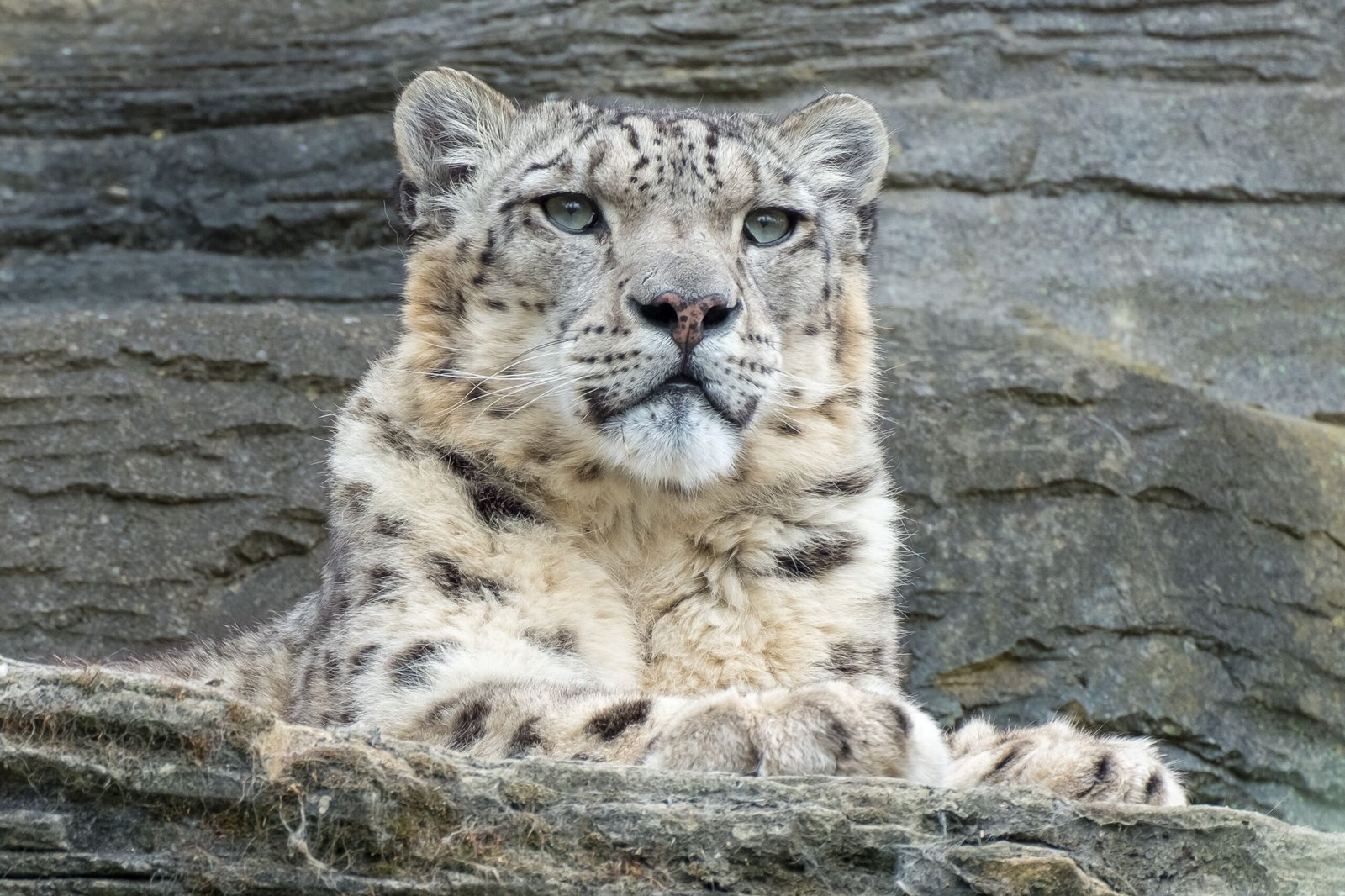
    Imagine standing on a windswept ridge in Gilgit-Baltistan, thousands of metres above sea level. The air is thin, the rocks are sharp, and the silence is enormous. Somewhere on the slope across from you, a pair of pale eyes may be watching. You will almost certainly never know it. This is the world of the snow leopard, a cat so shy and so perfectly camouflaged that local communities and researchers alike have long called it the “mountain ghost.”

    If you have never studied wildlife before, don’t worry. This guide is written for beginners. We will walk through what a snow leopard is, how it survives in some of the harshest terrain on Earth, where it lives in Pakistan, why it is in trouble, and what everyday people can do to help. By the end, we hope you will feel a little more connected to this remarkable animal that shares our northern mountains.

    Meet the Mountain Ghost

    The snow leopard (Panthera uncia) is a large wild cat that lives in the high mountains of Central and South Asia. In Urdu it is often called barfani cheetah or barfani tendua, which simply means “snow leopard.” Despite the name, it is not a close cousin of the common leopard you may have seen in pictures from the forests of Margalla Hills or Africa. It is its own species, adapted to a completely different life.

    An adult snow leopard is a medium-to-large cat. Most weigh somewhere between 22 and 55 kilograms, with males usually heavier than females. That makes it smaller than a lion or tiger, but do not let the size fool you. It is strong, muscular, and able to bring down animals much larger than itself.

    What really sets the snow leopard apart is its appearance. Its thick coat is a smoky grey or pale cream colour, covered in dark grey rosettes and spots. Against bare rock, patches of old snow, and shadow, that pattern breaks up the cat’s outline so well that even experienced wildlife watchers can stare straight at one without seeing it. Many photographers spend weeks in the field and come home without a single glimpse.

    That difficulty is exactly why the snow leopard has become a symbol of wild, untouched mountain country. If the ghost is still out there, the mountains are still healthy.

    Built for Life in the Mountains

    Snow leopards live where most animals would struggle to survive. Temperatures can drop far below freezing, the oxygen is thin, and the ground is steep and rocky. Over thousands of years, evolution has equipped the snow leopard with a remarkable set of tools.

    A coat like a winter jacket. The fur is dense and long, and the belly fur can grow especially thick to protect the cat when it rests on frozen ground. The cat’s thick fur keeps it warm even when the wind howls across a ridge.

    A built-in scarf. The snow leopard’s tail is very long, often nearly as long as its body, and it is thick and furry. When the cat curls up to sleep, it wraps its tail around its nose and face like a warm scarf. The tail also works as a balancing pole when the cat dashes along narrow ledges.

    Snowshoe paws. The paws are large and wide, which spreads the cat’s weight on deep snow, much like a snowshoe. The soles are also covered in fur, which adds grip and warmth.

    Powerful back legs. Snow leopards are famous jumpers. They can leap many metres across gaps in a single bound. Reports often mention horizontal jumps of up to around 15 metres, which is longer than a school bus. That strength helps them chase prey over broken ground and cross ravines that other predators would have to walk around.

    A nose built for cold air. Their nasal passages are short and wide, which helps warm and moisten freezing air before it reaches the lungs. This is useful at high altitude, where the air is both cold and thin.

    A voice that does not roar. Unlike lions and tigers, snow leopards cannot roar. Instead they make softer sounds, including mews, growls, hisses, and a friendly-sounding “chuff.” Some researchers describe a unique puffing sound used between cats that know each other. Because they live alone and in quiet places, even these small sounds can carry a long way across a valley.

    A Day in the Life of a Snow Leopard

    Snow leopards are most active around dawn and dusk, which scientists call being crepuscular. During the middle of the day, they often rest in shaded rocky spots, where their coat blends in perfectly. At night they travel, sometimes covering long distances, checking familiar routes along ridgelines and cliff edges.

    What do they eat?

    The snow leopard is a carnivore, and its menu depends on where it lives. In the mountains of Pakistan, its natural prey includes:

    • Siberian ibex, a large wild goat with dramatic curved horns
    • Markhor, Pakistan’s national animal, a wild goat famous for its spiralling horns
    • Blue sheep (bharal) and Ladakh urial, in parts of the range
    • Marco Polo sheep, in the far northern valleys
    • Smaller animals like marmots, hares, and game birds

    A snow leopard can kill an animal about three times its own body weight, and one large kill may feed the cat for several days. This is why a healthy population of wild mountain goats and sheep is so important. No wild prey, no snow leopards.

    Hunting like a ghost

    Snow leopards are ambush hunters. They use the terrain to creep close, staying low and hidden among rocks. When the moment is right, they charge downhill and surprise their prey in a short, explosive rush. Because the mountain slopes are steep, gravity gives them a boost.

    A mostly solitary life

    Adult snow leopards generally live alone. Each cat uses a large home range, and the size depends on how much prey is available. In areas with fewer wild animals, a cat may need a very large area to find enough food.

    Since they rarely meet face to face, snow leopards leave messages for each other. They scratch the ground to make marks called scrapes, spray scent on rocks, and rub their cheeks against boulders. These signs tell other cats who has passed through and when. For researchers, these same signs are valuable clues. Scat (droppings), pugmarks (footprints), and scrapes help scientists learn about a population without ever seeing the animals.

    Raising cubs

    Snow leopards usually mate in late winter, and females give birth in a hidden rocky den in spring or early summer. A litter commonly has two or three tiny cubs, which are born helpless and covered in thick, smoky fur. The mother raises them alone. For roughly the first couple of years, the cubs stay close, learning how to stalk, climb, and hunt. Not every cub survives. Life at high altitude is tough, and the mother must leave her cubs alone while she hunts, which makes them vulnerable.

    Because females raise only small litters and not every year, snow leopard numbers recover slowly when they decline. That is one reason why protecting adult cats is so important.

    Where Snow Leopards Live: Pakistan’s Northern Mountains

    Snow leopards roam across twelve countries in Asia: Afghanistan, Bhutan, China, India, Kazakhstan, Kyrgyzstan, Mongolia, Nepal, Pakistan, Russia, Tajikistan, and Uzbekistan. Pakistan is a special part of this puzzle, because three of the world’s greatest mountain ranges meet here: the Himalaya, the Karakoram, and the Hindu Kush.

    In Pakistan, snow leopards are found mainly in:

    • Gilgit-Baltistan, including areas around Hunza, Shimshal, Skardu, Astore, and the Karakoram
    • Chitral in Khyber Pakhtunkhwa, along the Hindu Kush
    • Parts of Azad Jammu and Kashmir and the high valleys near the Himalaya

    They tend to prefer steep, rugged land with cliffs, ridges, and rocky outcrops, often between roughly 3,000 and 4,500 metres above sea level. In winter, some cats follow their prey down to lower slopes, which is when local people sometimes get a rare sighting.

    Protected places such as Khunjerab National Park, Central Karakoram National Park, and Chitral Gol National Park provide important habitat. Many other snow leopard areas are not formally protected at all and lie within community-managed pastures, which makes local support vital.

    How many are left?

    No one knows the exact number of snow leopards. They are so hard to count that scientists rely on camera traps and genetic analysis of scat. Estimates for the global wild population are generally given as a few thousand cats, commonly somewhere between 4,000 and 6,500. For Pakistan, estimates have usually been in the low hundreds. The numbers vary between surveys, and researchers are still improving the methods. What nearly everyone agrees on is that the species is rare and needs careful protection.

    The International Union for Conservation of Nature (IUCN) lists the snow leopard as Vulnerable, meaning it faces a high risk of extinction in the wild if threats continue. Gilgit-Baltistan has also adopted the snow leopard as a proud symbol of the region.

    Why the Snow Leopard Matters

    You might wonder: why should we care about one rare cat in far-off mountains? There are a few important reasons.

    It is an “indicator” species. The snow leopard sits at the top of the mountain food chain. When snow leopards are doing well, it usually means there is enough prey, healthy grasslands, and a stable ecosystem. When they disappear, it is often a warning sign that something is wrong.

    It protects the water we depend on. The high mountains where snow leopards live are the source of glacier-fed rivers that flow into the Indus basin. Millions of people in Pakistan depend on this water for drinking, farming, and electricity. Protecting snow leopard habitat means protecting the pastures, wildlife, and watersheds that keep those rivers healthy.

    It belongs to our culture and identity. For communities in the north, the snow leopard is part of local stories, folklore, and pride. Losing it would mean losing a piece of our natural heritage.

    It supports livelihoods. Wildlife tourism, trekking, and guiding bring income to remote valleys. A living snow leopard can be worth far more to a village than a dead one.

    What Threatens the Mountain Ghost?

    The snow leopard may look invincible, but it faces serious challenges, and most of them involve people.

    1. Conflict with herders

    For families in mountain villages, livestock such as goats, sheep, and yaks are their savings and their future. Sometimes a snow leopard slips into a poorly protected pen at night and kills many animals in a single attack. For a family with few resources, that is a heavy loss. In anger or desperation, some herders retaliate. This is one of the biggest threats to snow leopards across their range, and it is important to treat it with understanding. The herders are not villains; they are people trying to protect their income.

    2. Loss of natural prey

    When wild ibex, markhor, and sheep are hunted illegally or driven away by overgrazing, snow leopards have less to eat. A hungry cat is more likely to turn to livestock, which fuels the conflict above.

    3. Poaching and illegal trade

    Snow leopards are protected by law, but they are still hunted in some places for their fur and body parts. Strong law enforcement and community vigilance are key to stopping this.

    4. Climate change

    Mountains are warming quickly. As temperatures rise, the tree line can creep higher and glaciers retreat, which may shrink the cold, open habitat where snow leopards and their prey live. Scientists are still studying exactly how this will play out, but the concern is real.

    5. Roads, mines, and development

    New roads, mining, and large infrastructure can cut through snow leopard habitat, disturb prey, and make it easier for poachers to reach remote areas. Development is important for communities, but it needs careful planning to leave room for wildlife.

    Good News: People Are Making a Difference

    The story of the snow leopard is not only about problems. In Pakistan, there are encouraging examples of people working together.

    Community-based conservation. Organisations such as the Snow Leopard Foundation, WWF-Pakistan, and other partners work with mountain communities to protect wildlife in ways that also help families. Villagers are trained as wildlife monitors, and community groups help manage hunting and grazing so that both people and animals benefit.

    Predator-proof corrals. One simple but powerful idea is to strengthen livestock pens with sturdy walls and roofs so that a leopard cannot get in. When the animals are safe at night, losses drop, and so does the reason for revenge killings.

    Livestock insurance and compensation. In some valleys, community-run insurance schemes help families recover if a snow leopard kills their animals. Villagers contribute to a shared fund, and conservation groups help support it. In return, the community agrees to protect the cats. It is a practical way of showing that living alongside wildlife can be fair.

    Trophy hunting and community benefits. In parts of northern Pakistan, regulated hunting programs for ibex and markhor have been used to generate income for local communities, with a share going to conservation. These programs are debated by different groups, but supporters point out that they have helped local people see wild animals as valuable and have contributed to recoveries in some markhor populations. This, in turn, supports the snow leopard’s food supply.

    Research with camera traps. Scientists place motion-triggered cameras along ridgelines and trails. Over time these cameras have captured amazing images of snow leopards, mothers with cubs, and even rare interactions. This information helps decide where to protect land and how to design better programs.

    Global cooperation. In 2013, the twelve snow leopard range countries joined together under the Global Snow Leopard and Ecosystem Protection Program, promising to work across borders to secure the species and its habitat. Every year, International Snow Leopard Day on 23 October is also celebrated to raise awareness about the animal.

    How You Can Help (Even If You Live Far from the Mountains)

    You do not need to be a scientist or a mountaineer to make a difference. Here are some simple ways to support snow leopards:

    1. Learn and share. Talk to friends and family about the snow leopard. Awareness is the first step toward protection. Sharing this article is a good start.
    2. Support trusted conservation groups. Consider donating to or volunteering with organisations that work on snow leopards in Pakistan and across Asia.
    3. Choose responsible tourism. If you travel to the north, pick local guides and homestays, follow park rules, keep noise low, and never leave rubbish behind. Money spent in local communities helps show that wildlife is worth protecting.
    4. Respect wildlife. Never chase, feed, or crowd animals, and do not buy products made from wild animal fur or body parts.
    5. Reduce your carbon footprint. Climate change affects mountains first and fastest. Small steps, like saving energy and reducing waste, add up.
    6. Teach children. Stories, drawings, and school projects about snow leopards help the next generation grow up caring about wildlife.

    Tips for travellers hoping to see one

    It is worth being honest: seeing a snow leopard in the wild is extremely rare, and most visitors will not. Specialised wildlife tours with trained trackers do exist in some parts of the world, and they involve long days in cold, high-altitude conditions. If you are travelling in the north of Pakistan, try to enjoy the whole experience: the landscapes, the people, the food, and the other wildlife such as ibex, marmots, and birds of prey. If a snow leopard does appear, consider it a gift, keep your distance, and stay quiet.

    Snow Leopard Myths vs. Facts

    Myth: Snow leopards are a type of regular leopard. Fact: They are a separate species, adapted for cold, rocky, high-altitude life.

    Myth: Snow leopards attack people. Fact: Attacks on humans are extremely rare. Snow leopards are shy and avoid people.

    Myth: They can roar like lions. Fact: Snow leopards cannot roar. They make softer sounds like mews, hisses, and chuffs.

    Myth: There are plenty of them because we never see them. Fact: The opposite is true. We rarely see them because they are naturally secretive, and also because there are not many left.

    Myth: Protecting snow leopards hurts local people. Fact: When conservation is designed together with communities, it can bring benefits such as income, safer livestock, and healthier pastures.

    A Few Quick Questions

    Are snow leopards dangerous? They are powerful predators, but they avoid humans and almost never attack people. The main conflict is with livestock, not people.

    How long do snow leopards live? In the wild they are thought to live around 10 to 12 years or somewhat longer, while cats in zoos can live notably longer.

    Can you keep a snow leopard as a pet? No. They are wild animals protected by law, and they need vast, rugged habitat to survive.

    When is the best time to learn more? Right now! International Snow Leopard Day on 23 October is a great opportunity to read, share, and support conservation efforts.

    Final Thoughts: Keeping the Ghost Alive

    The snow leopard is more than a beautiful animal. It is a living signal that our northern mountains are still wild, still balanced, and still full of life. It reminds us that nature’s strongest creatures still depend on the choices people make: how we treat our pastures, how we share space with wildlife, and how we care for the glaciers and rivers that feed our country.

    Protecting the mountain ghost is not only the job of scientists or governments. It begins with curiosity, grows with understanding, and succeeds when communities, conservationists, and everyday readers like you work together. Every story shared, every responsible trip, and every small act of care helps give the snow leopard a future.

    So the next time you look at a photograph of the Karakoram or the Hindu Kush, remember that somewhere up there, quietly watching from the rocks, a ghost is still walking the mountains. Let’s make sure it never disappears.

    Have you ever visited northern Pakistan, or heard a local story about the snow leopard? Share your experience in the comments below. We would love to hear it!

  • 10 Endangered Species on the Brink and What Is Being Done to Save Them

    10 Endangered Species on the Brink and What Is Being Done to Save Them

    Oct 18, 2026

    Every year, some of the world’s most fascinating animals move a little closer to disappearing forever. It’s a sobering thought, but it isn’t the whole story. Across the globe, scientists, rangers, local communities, and ordinary people are working hard to give these animals a second chance, and in many cases, it’s working.

    In this post, we’ll meet 10 endangered species that are truly on the brink. For each one, we’ll explain in simple terms what’s threatening it and, more importantly, what is being done to save it. You don’t need any background in science to follow along. If you care about wildlife and want to understand how conservation actually works, this guide is for you.

    What Does “Endangered” Actually Mean?

    When scientists talk about endangered animals, they often rely on the Red List of Threatened Species, kept by an organization called the International Union for Conservation of Nature, or IUCN. It sorts species into categories based on how likely they are to go extinct.

    The three “threatened” categories are:

    • Vulnerable: the species faces a high risk of extinction in the wild.
    • Endangered: the species faces a very high risk of extinction in the wild.
    • Critically endangered: the species faces an extremely high risk of extinction in the wild. This is the most serious category before a species is declared extinct in the wild or extinct.

    Many of the animals in this post are critically endangered, which means every individual matters. Population numbers can change from year to year, so the figures you’ll see here are based on recent estimates and are best read as a snapshot rather than a final count.

    A quick note on tone: some of these stories are hard to read. But please keep going, because each one also includes real reasons for hope. Let’s begin.

    1. The Vaquita: The World’s Rarest Marine Mammal

    The vaquita is the smallest porpoise in the world, with dark rings around its eyes that make it look like it’s wearing eyeliner. It lives in only one place on Earth: the northern end of the Gulf of California, off the coast of Mexico.

    The numbers. The first survey in 1997 estimated about 567 vaquitas. The most recent survey, carried out in 2025, found roughly 7 to 10 individuals, along with newborn calves. That’s a tiny number, but it was slightly higher than the lowest count ever recorded in 2024.

    The threat. Vaquitas are not hunted. They drown after getting tangled in gillnets, which are large nets that hang like curtains in the water. Many of these nets are set illegally to catch a large fish called the totoaba, whose swim bladder is sold on the black market.

    What’s being done. Conservation groups and the Mexican Navy patrol the vaquita’s habitat and remove illegal nets. Scientists use underwater microphones and long-range binoculars to monitor the animals without disturbing them. The sighting of calves shows that vaquitas are still breeding. Experts stress that stronger enforcement against illegal fishing is the key to their survival.

    2. The Javan Rhino: A Species With One Home

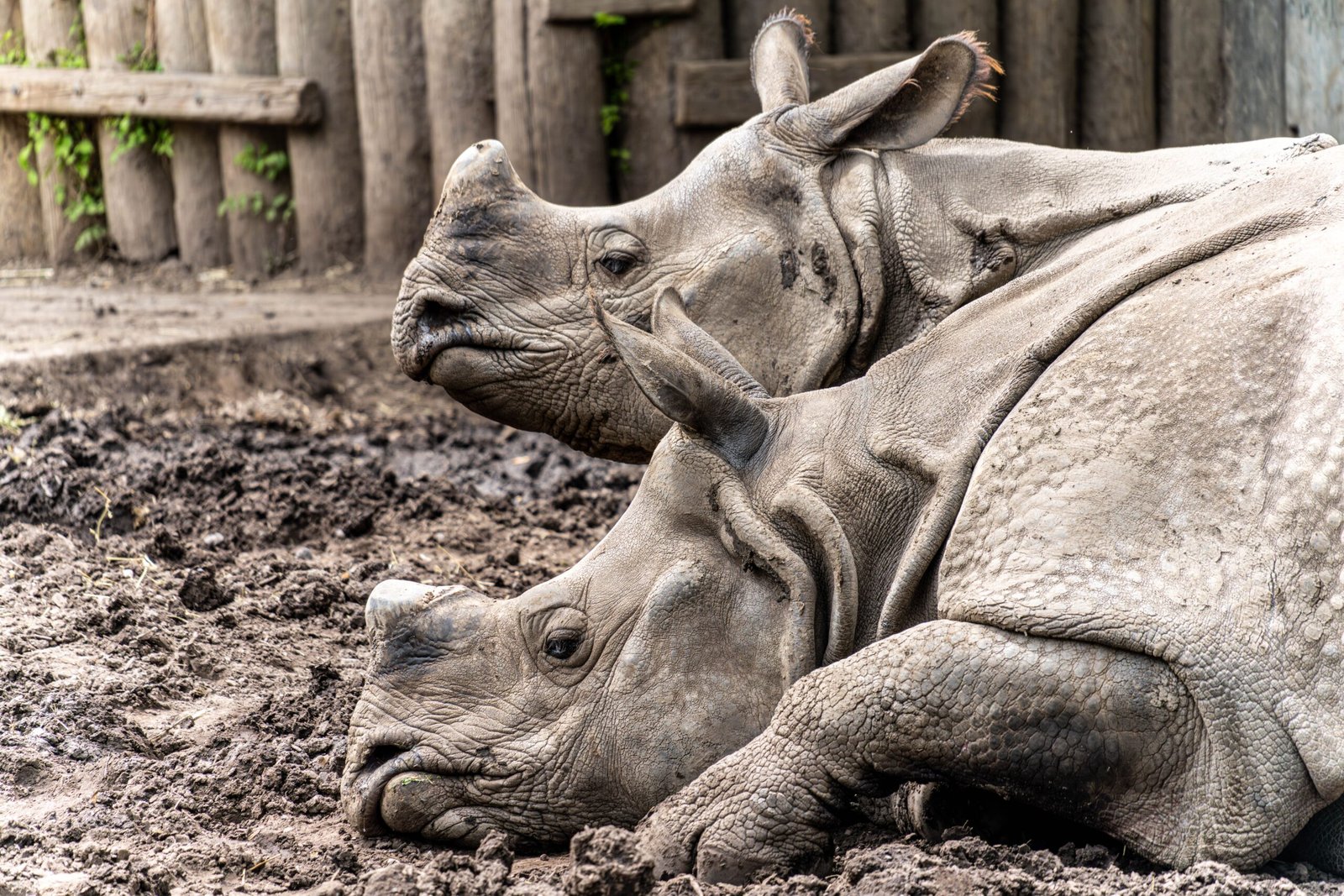
    The Javan rhino is one of the rarest large mammals on the planet. It has a single horn, folded skin that looks like armor, and a shy personality. Today it survives in only one place: Ujung Kulon National Park, on the western tip of the Indonesian island of Java.

    The numbers. Slow, steady progress had raised the population from fewer than 50 about a decade ago to an estimated 76 by 2023. Then came terrible news. A poaching gang had killed up to 26 rhinos between 2019 and 2023. The International Rhino Foundation now estimates the population at around 50.

    The threat. Poaching for horns is the biggest danger, along with the risk that disease or a natural disaster could harm a single small population all at once.

    What’s being done. After the poaching ring was exposed, authorities strengthened security in the park. Rhino Protection Units patrol the forest, and camera traps help track individuals. There is also some encouraging news: six calves were born in just two years, and no new poaching cases have been reported since 2023. Conservationists also want to create a second home for the species someday, though that plan has been postponed while the focus stays on protecting the rhinos that remain.

    3. The Amur Leopard: The Rarest Big Cat

    The Amur leopard has thick, pale fur to survive the freezing winters of the forests along the border between Russia and China. It has long been called the rarest big cat on Earth.

    The numbers. In the early 2000s, only about 35 wild Amur leopards were left. A 2018 study using camera traps estimated 84 in the wild. More recently, Russian and Chinese scientists have reported at least 223 leopards recorded in the transboundary “Land of Big Cats” reserve, a sixfold increase over about 20 years. These numbers come from a sponsor’s press release, so treat them as encouraging but best confirmed by future surveys.

    The threat. Poaching, forest fires, logging, and a small gene pool all put the leopards at risk.

    What’s being done. Russia created the Land of the Leopard National Park in 2012, and China created a large national park for tigers and leopards. In 2024, the two countries agreed to create a joint reserve so that the cats can roam across the border. Hundreds of camera traps now track individual leopards by their unique spots.

    4. The Kākāpō: The Parrot That Can’t Fly

    The kākāpō is a large, round, moss-green parrot from New Zealand. It is the world’s heaviest parrot, it can’t fly, and it is active at night. It also has a sweet, owl-like face, which is why it’s sometimes called the “owl parrot.”

    The numbers. In 1995, only 51 kākāpō were left. In 2026, a record breeding season added 90 chicks, bringing the official population to 325 birds on September 1, the highest in the modern recovery era. That’s a remarkable comeback, though the species is still critically endangered.

    The threat. Kākāpō evolved on islands with no land predators, so they freeze when threatened rather than run. When cats, rats, and stoats arrived with people, the birds were easy targets. Another challenge is that kākāpō only breed in years when certain native trees, called rimu, produce lots of fruit, which can mean gaps of several years.

    What’s being done. Every kākāpō wears a transmitter and is closely monitored. The birds live on predator-free islands, and rangers help during nesting season by providing extra food, protecting eggs, and caring for sick birds. The next big challenge is finding more predator-free homes as numbers grow.

    5. The Northern White Rhino: Down to Two

    The northern white rhino is the most dramatic story on this list. Only two animals are left, a mother and daughter named Najin and Fatu. Both are female, and they live under round-the-clock protection at a conservancy in Kenya. The last male, Sudan, died in 2018.

    The threat. Poaching for horns, combined with years of conflict in the animals’ home range in central Africa, wiped out the wild population.

    What’s being done. Scientists with a project called BioRescue are trying something that has never been done before. They have collected eggs from the females and sperm from males that died earlier, and created embryos in the lab. Around 30 embryos are stored frozen. In 2023, the team achieved the world’s first rhino pregnancy through IVF, using a southern white rhino, a close relative, as a surrogate. Although that surrogate died from an unrelated infection, it proved the technique works. The plan is to transfer northern white embryos into southern white surrogates. Progress here changes quickly, so check the BioRescue project for the latest news.

    Even if the technique succeeds, the species would start from a very small genetic base. Still, it is a hopeful example of science working alongside traditional protection.

    6. The California Condor: Back From 22

    With a wingspan of up to nearly three meters (about nine feet), the California condor is the largest flying bird in North America. It soars on warm air currents, feeding on dead animals.

    The numbers. In 1982, only 22 condors were left in the world. By the end of 2025, the wild population had reached 392 birds, and the total population, including birds in zoos and breeding centers, passed 600 for the first time. About 16 chicks fledged in the wild in 2025 alone.

    The threat. Poaching, DDT pollution, and lead poisoning nearly wiped condors out. Lead is still the biggest danger today. Condors that feed on carcasses left by hunters can swallow lead bullet fragments, and lead poisoning has been a leading cause of death in the free-flying birds.

    What’s being done. In the 1980s, scientists made a bold decision to bring the last wild condors into captivity so they could breed safely. Their offspring were then released at several sites in California, Arizona, Utah, and Baja California in Mexico. Programs also encourage hunters to use non-lead ammunition, and California has banned lead ammunition in condor country. The goal is a wild population that can sustain itself without human help.

    7. The Black-Footed Ferret: Rescued by Cloning

    The black-footed ferret is a slim, nocturnal member of the weasel family, with a black “bandit mask” across its face. It lives on the North American prairie and depends almost entirely on prairie dogs, both for food and for shelter in their burrows.

    The numbers. The species was thought to be extinct until a small group was found in Wyoming in 1981. Today, roughly 370 live in the wild, according to the World Wildlife Fund, with additional animals in breeding facilities.

    The threat. Prairie dog numbers have fallen because of habitat loss and poisoning, and the disease sylvatic plague harms both prairie dogs and ferrets. Another problem is genetics. Every living black-footed ferret descends from just seven animals, which means the species has little genetic variety to help it resist disease.

    What’s being done. Breeding programs have produced thousands of ferrets, which have been released across the western United States, Canada, and Mexico. Scientists have also used cloning. In 2020, a ferret named Elizabeth Ann was born, cloned from cells of a ferret named Willa that were frozen in 1988. Willa’s genes carry about three times more unique variation than the current population. In 2024, one of the clones, Antonia, gave birth to kits, the first time a cloned endangered species in the United States produced offspring.

    8. The Mountain Gorilla: A Hard-Won Success

    Mountain gorillas live in the misty, high-altitude forests of Rwanda, Uganda, and the Democratic Republic of the Congo. They have long, thick fur that keeps them warm in the cold mountain air, and every gorilla has a unique nose print, like a human fingerprint.

    The numbers. The population has grown from roughly 680 to more than 1,000 over about ten years, the highest ever recorded for this group of gorillas. In 2018, the IUCN moved mountain gorillas from “critically endangered” to “endangered,” one of the rare cases where a species improved in status.

    The threat. Their forests border farmland used by a growing human population. Poaching, snares meant for other animals, and diseases that can pass between people and gorillas remain dangers.

    What’s being done. Trained rangers patrol the forests daily, and veterinarians step in to treat injured or sick gorillas. Tourism, carefully managed, brings money to local communities, which gives people a strong reason to protect the animals. Experts warn that the gains are fragile and that numbers could slip back quickly without continued effort.

    9. The Tapanuli Orangutan: The Newest Great Ape, and the Rarest

    The Tapanuli orangutan was only identified as a separate species in 2017. It lives in a small patch of forest in the Batang Toru area of northern Sumatra in Indonesia, making it the rarest great ape on Earth.

    The numbers. A major study covering 2021 to 2023, published in 2026, estimates just 716 Tapanuli orangutans remain, spread across three groups. The same study found about 11,694 Sumatran orangutans, a drop of nearly 20 percent compared with 2011. Both species are critically endangered.

    The threat. Forest loss is the main driver. The study found that habitat loss explained about three quarters of the changes in population across the groups studied. Roughly one in five orangutans lives outside formally protected areas, which leaves them especially exposed. With so few Tapanuli orangutans left, even a handful of deaths each year can have serious consequences.

    What’s being done. Groups such as the Sumatran Orangutan Conservation Programme work to protect forests, rescue orangutans from conflict with people, and monitor the population. Researchers say protection must now reach beyond national parks to include forests that currently have no formal protection.

    10. The Hawksbill Turtle: Guardian of the Reef

    The hawksbill sea turtle is named for its narrow, pointed beak, which looks a bit like a bird’s. It has a beautifully patterned shell and lives in tropical seas around the world, often near coral reefs, where it feeds on sponges.

    The status. The hawksbill is listed as critically endangered worldwide by the IUCN. Scientists estimate that its numbers fell by about 80 percent over three generations before protections began to take hold, though the situation varies from place to place.

    The threat. For centuries, hawksbills were hunted for their shells, which were made into jewelry and decorations. International trade has been banned since 1993, but illegal trade continues, and eggs and meat are still taken in some places. Habitat loss, coastal development, and damage to coral reefs add to the pressure. Hawksbills also take more than 35 years to reach maturity, so populations recover slowly.

    What’s being done. The hawksbill is protected by international agreements such as CITES. Many countries have set up marine protected areas, and local groups guard nesting beaches, move vulnerable nests, and work with communities to reduce egg collection. Researchers are also tracking turtles and studying nesting beaches to learn where help is most needed.

    What These Stories Teach Us About Saving Species

    Looking at all ten animals together, a few clear lessons stand out.

    • Protecting habitat comes first. Gorillas, orangutans, and leopards all depend on large, healthy forests, and the species that recover do so because their homes are protected.
    • People on the ground make the difference. Rangers, veterinarians, and local communities keep gorillas, rhinos, and nesting turtles alive day after day.
    • Fighting illegal trade matters. Vaquitas, rhinos, and hawksbills are all hit by black markets, and stronger enforcement is essential.
    • Technology can help, but it isn’t magic. Cloning, IVF, camera traps, and underwater microphones are powerful tools, but experts agree they work best alongside habitat protection and anti-poaching efforts.
    • Recovery takes time and can be reversed. The Javan rhino’s setback shows how quickly years of progress can be undone, while the kākāpō and condor show what decades of steady work can achieve.
    • Cooperation across borders works. The Amur leopard’s joint reserve between Russia and China is a model of nations sharing responsibility for a species that does not recognize borders.

    How You Can Help

    You don’t need to be a scientist or travel far to make a difference. Here are practical, beginner-friendly steps:

    • Support reputable conservation groups. Even a small donation or volunteer hour helps fund rangers, research, and habitat protection.
    • Never buy products made from endangered wildlife. This includes ivory, tortoiseshell, and rhino horn products, as well as souvenirs of unknown origin.
    • Choose sustainable seafood. Look for labels that show fish were caught in ways that don’t harm other marine life, such as porpoises and turtles.
    • Buy responsibly sourced products. Palm oil, paper, and wood linked to forest clearing can harm species like orangutans, so look for certified options.
    • Use lead-free ammunition if you hunt. This protects condors and other scavengers.
    • Visit wildlife responsibly. Choose well-run reserves and tours that put animal welfare and local communities first.
    • Share what you’ve learned. Awareness spreads when people talk to friends and family, and it builds public support for strong protection laws.

    Final Thoughts

    The ten animals in this post are in very different situations. Some, like the vaquita and the northern white rhino, are hanging on by a thread. Others, like the condor, the kākāpō, and the mountain gorilla, show that recovery is possible when people commit to it.

    The common thread is that extinction is not inevitable. Every one of these animals is still here because someone decided it was worth saving, and every one needs that commitment to continue.

    So take heart, stay curious, and pass it on. If this post gave you hope or taught you something new, share it with someone who loves wildlife. The more people who care, the better the chances for every animal on this list.

  • How Do Bats See in the Dark? Echolocation Explained Simply

    How Do Bats See in the Dark? Echolocation Explained Simply

    Oct 18, 2026

    Imagine flying through a pitch-black cave at full speed, weaving between rocks, dodging branches, and snatching tiny insects out of the air, all without turning on a single light. It sounds impossible, but bats do it every night.

    How? The answer is a fascinating skill called echolocation. Instead of relying on light, bats use sound. They send out high-pitched calls, listen for the echoes that bounce back, and use those echoes to build a detailed picture of the world around them. In a way, they “see” with their ears.

    This ability has fascinated scientists for more than two centuries, and it has even inspired human inventions, from sonar on ships to the ultrasound scans used in hospitals.

    In this post, we’ll explain echolocation in simple, everyday language. We’ll look at how it works step by step, what bats can learn from a single echo, how different bats use different kinds of calls, and how some insects have learned to fight back. We’ll also talk about why bats are so important and how you can help them.

    You don’t need any science background to follow along. If you’ve ever shouted in a canyon and heard your voice bounce back, you already understand the basic idea. Let’s start with a common question: are bats really blind?

    Are Bats Really Blind?

    The saying “blind as a bat” is one of the most common myths about animals. In truth, bats are not blind. All bats have eyes, and many can see quite well. Large fruit bats, sometimes called flying foxes, have big eyes and good vision, and they rely heavily on sight and smell to find ripe fruit.

    Smaller bats usually have tinier eyes and weaker eyesight, but they can still tell light from dark and see shapes. However, vision isn’t always helpful when you hunt at night. On a moonless evening, or deep inside a cave, there simply isn’t enough light for eyes to work well. That’s where echolocation comes in.

    What Is Echolocation?

    The word echolocation means finding the location of things using echoes. Here’s a simple way to picture it.

    Imagine standing at the edge of a big, empty valley and shouting “Hello!” A moment later, you hear your voice come back. The longer it takes to return, the farther away the valley wall is. If the echo is faint, the wall may be soft or very far off. If it’s sharp and loud, it might be a hard, nearby cliff. Your brain could use those clues to guess how far the cliff is.

    Bats do the same thing, but much faster and with far more detail. They make sounds, listen for the echoes, and instantly figure out what’s around them.

    Most of the roughly 1,400 species of bats use echolocation, especially the smaller, insect-eating ones. Some larger fruit-eating bats do not use it at all, and a few of them use a simpler form of clicking with their tongues. But for the many bats that hunt insects in the dark, echolocation is the main tool for finding food and getting around.

    It’s also worth knowing that bats are the only mammals that can truly fly, and they are the second largest group of mammals after rodents. That makes them one of the most successful animal groups on Earth, and echolocation is a big part of the reason.

    How Echolocation Works, Step by Step

    Let’s follow a bat as it hunts a moth on a dark night.

    1. The bat makes a sound. Using its voice box, much like ours, the bat produces a very short, high-pitched call. It sends this sound out through its mouth or, in some species, through its nose.
    2. The sound travels outward. Sound moves through the air as waves. When the waves hit an object, such as a tree, a wall, or a moth, some of them bounce back.
    3. The echo returns. The bat’s large, sensitive ears catch the returning echo. Many bats have oddly shaped ears or folds of skin near the ears that help them gather sound from different directions.
    4. The brain does the math. The bat’s brain compares the original call with the echo. It measures how long the echo took to return, how loud it is, and how its pitch has changed. From these clues, it builds a sound picture of what’s out there.
    5. The bat adjusts and repeats. Within a fraction of a second, the bat steers toward its target or around an obstacle, then sends out another call. This happens again and again, many times per second.

    Sounds too high for us to hear

    Humans can hear sounds up to roughly 20,000 hertz. Many bat calls are far higher than this, between about 20,000 and well over 100,000 hertz. These sounds are called ultrasound, and they are completely silent to human ears. That’s why you can stand next to a bat and never hear its calls.

    High-pitched sounds have short wavelengths, and short wavelengths bounce off very small things. This is exactly what a bat needs to detect something as small as a mosquito. A low-pitched sound would simply pass around a tiny insect, like a big ocean wave passing around a pebble.

    Loud, but protected

    It may surprise you to learn that some bat calls are extremely loud, as loud as a smoke alarm held close to your ear. Louder calls produce stronger echoes, which helps the bat detect faraway objects.

    So why doesn’t the bat deafen itself? Tiny muscles in the bat’s middle ear briefly tighten as it calls, which dampens its hearing. They relax a split second later, just in time to hear the returning echo. It’s a bit like quickly covering your ears when you shout, then uncovering them to listen.

    What Can a Bat Learn From an Echo?

    An echo carries a surprising amount of information. By listening carefully, a bat can learn many things about an object, all within a split second.

    How far away it is

    The time between the call and the echo tells the bat the distance. A long delay means the object is far away. A short delay means it is close. Bats can judge distances very precisely, even to within a few millimeters in some cases.

    Which direction it’s in

    Because a bat has two ears, it can compare the echo arriving in each one. If the echo reaches the left ear slightly earlier or louder, the object is on the left. Some bats can also tell whether something is above or below them by using the shape of their ears and the way sound bounces off their ear folds.

    How big it is

    A large object reflects more sound than a small one, so the strength of the echo gives a clue about size. A tree trunk returns a strong echo, while a tiny gnat returns a faint one.

    What it’s made of

    Different surfaces reflect sound in different ways. A smooth rock gives back a clean, sharp echo. Fur or leaves absorb some of the sound and give a softer, fuzzier echo. By noticing these differences, a bat can tell a juicy insect from a leaf, and in some cases, even tell kinds of insects apart.

    How fast it’s moving

    Bats can also figure out whether a target is flying toward them or away from them. This uses a trick called the Doppler effect. You’ve heard it when an ambulance passes by: the siren sounds higher as it approaches and lower as it moves away. A flying insect changes the pitch of the echo in the same way, and a bat can pick up on these tiny changes.

    In some bats, like the horseshoe bats, this skill is taken even further. They adjust their own call pitch as they fly, so the returning echo always lands in the range where their ears are most sensitive.

    The final attack

    When a bat closes in on its prey, something dramatic happens. It speeds up its calls, producing a rapid series of clicks known as the “feeding buzz.” At the fastest, some bats can make around 200 calls per second. This gives the bat a near-constant update on the target’s position, which helps it make a last-moment correction and catch the insect, often using its wing or tail membrane like a net.

    Different Bats, Different Calls

    Not all bats echolocate in the same way. Just as birds have different songs, bats have different calls that suit their lifestyles and hunting grounds.

    Sweeping calls and steady calls

    Many bats use calls that sweep quickly from a high pitch down to a lower one. These are sometimes called frequency-modulated calls. A sweeping call is excellent for judging the exact distance and texture of objects, which makes it useful in cluttered places, like forests, where there are lots of branches and leaves.

    Other bats, such as horseshoe bats, make calls with a long, steady pitch before a short sweep. These are better for detecting the tiny flutter of an insect’s wings, which helps them pick out prey from a leafy background.

    Mouth or nose?

    Most bats produce their calls through the mouth, but some send them out through the nose. Horseshoe bats and leaf-nosed bats have strange and wonderful folds of skin on their faces, called nose-leaves. These act like a megaphone, shaping and aiming the sound in a narrow beam. It’s one reason bats can look so odd, with faces that seem to belong in a fantasy movie.

    Open sky or tight spaces?

    Bats that hunt in open skies often use loud, long-range calls that travel far, because they don’t have to worry about branches. Bats that hunt in dense forests use shorter, softer calls to avoid getting confused by too many echoes bouncing back at once.

    The whisperers

    Some bats go quiet on purpose. The barbastelle bat, for example, uses very faint calls. Scientists believe this helps it sneak up on moths that can hear loud bat calls and flee. Soft calls give the moth less warning.

    Bats that click

    Egyptian fruit bats are a special case. Instead of using their voice boxes, they make clicking sounds with their tongues. These clicks let them find their way around dark caves where they roost. Outside the cave, they rely more on their big eyes and sharp sense of smell to find fruit.

    Many species, many solutions

    With over 1,400 species of bats living on every continent except Antarctica, it makes sense that they have found many ways to use sound. Scientists often identify bats just by recording and analyzing their calls, using special devices that translate ultrasound into sounds or pictures we can understand. These tools help researchers study bat populations without disturbing the animals.

    Moths Fight Back

    It might seem like bats have all the advantages, but their prey has been developing defenses for millions of years. This long-running contest is sometimes called an evolutionary arms race.

    Moths with ears

    Many moths have tiny ears that can detect bat calls. When a moth hears a bat nearby, it may fly in loops, drop suddenly toward the ground, or fold its wings and fall like a stone. These last-second moves can make it much harder for the bat to follow.

    Moths that jam the signal

    Some tiger moths do something even more clever. They make their own ultrasonic clicks. Scientists have found that these clicks can warn bats that the moth tastes bad, and in some cases they seem to interfere with the bat’s echolocation, making it harder for the bat to judge where the moth is.

    Fuzzy and stealthy

    Certain moths and other insects have soft, fuzzy bodies or wing scales that absorb sound rather than bounce it back. This acts like a type of natural stealth technology, making the insect harder to detect.

    The result is a never-ending game of cat and mouse. When bats get better at finding moths, moths get better at escaping, and the cycle continues.

    Other Animals That Use Echolocation

    Bats are the most famous echolocators, but they aren’t alone.

    • Dolphins and toothed whales. These marine mammals send out clicks and listen for echoes to find fish in murky or deep water. A dolphin can tell a lot about an object, including its size and shape, just from echoes.
    • Oilbirds. These unusual birds of South America roost in dark caves and use clicking sounds to move around. They are one of the few birds that use true echolocation.
    • Swiftlets. Certain cave-dwelling swiftlets in Asia also make clicking calls to navigate through dark caves.
    • Shrews and tenrecs. Some of these small mammals use simple forms of echolocation to explore their surroundings.

    It’s remarkable that echolocation evolved separately in different groups of animals. Scientists call this convergent evolution, which means unrelated animals arrive at a similar solution because they face a similar problem. Whenever life finds itself in the dark, using sound turns out to be a smart way to see.

    Why Bats Matter

    Bats have a bad reputation in movies and folklore, but in real life they are helpful, gentle animals that do important work for people and nature.

    • Natural pest control. Many bats eat huge numbers of insects every night, including mosquitoes and crop pests. A single small bat can eat hundreds or even thousands of insects in one night. Researchers estimate that this saves farmers billions of dollars each year in the United States alone, by reducing the need for pesticides.
    • Pollination. In warm parts of the world, bats visit flowers at night, carrying pollen from plant to plant. Agave, which is used to make tequila, and some types of banana, mango, and durian depend partly on bats.
    • Seed spreading. Fruit-eating bats carry seeds over long distances, helping forests regrow after they have been cleared or damaged.
    • Inspiration for science. Studying echolocation has inspired improvements in sonar, medical imaging, and even devices designed to help blind people sense their surroundings.

    Challenges bats face

    Sadly, many bat populations are in trouble. Loss of roosting places, such as old trees and caves, is a big problem. Pesticides reduce their food supply, wind turbines can harm bats that fly near them, and a disease called white-nose syndrome has killed millions of bats in North America. Because bats have only one or two pups a year, populations recover slowly.

    How You Can Help Bats

    There are many easy things you can do to support bats in your own area:

    • Plant native flowers and shrubs. They attract the night-flying insects that bats eat.
    • Cut back on pesticides. Fewer chemicals mean more insects and cleaner food for bats.
    • Offer a bat house. A properly built bat box can give local bats a safe place to rest and raise their young.
    • Reduce outdoor lighting. Too much light at night can disturb bats and their insect prey.
    • Never disturb roosts. If you find bats in a cave or building, leave them alone and call a local wildlife expert for advice.
    • Spread accurate information. Help your friends and family see bats as the helpful animals they are.

    A quick safety note: like any wild animal, a bat should not be handled with bare hands. If you find one on the ground, contact a local wildlife rescue group rather than picking it up.

    Final Thoughts

    So, how do bats see in the dark? They don’t rely on light at all. They send out calls too high for us to hear, listen to the echoes, and use their remarkable brains to turn those echoes into a rich picture of the world. With this skill, they can find a mosquito in a pitch-black sky, weave through a dense forest, and navigate a cave they’ve never visited.

    The next time you see a small shape flickering past at dusk, you’ll know there’s an amazing sound-based world going on right above your head. Bats aren’t scary. They’re gifted, hardworking neighbors that deserve our respect and protection.

    If you enjoyed learning about echolocation, share this post with a friend, and keep looking up when the sun goes down.

  • 10 Animals With Superpowers: Regeneration, Venom Immunity and More

    10 Animals With Superpowers: Regeneration, Venom Immunity and More

    Oct 18, 2026

    When we imagine superpowers, we usually think of comic book heroes: someone who can regrow a lost arm, survive a deadly snake bite, or shoot out a blast of heat. It might surprise you to learn that real animals can do versions of all these things.

    These abilities aren’t magic, and they didn’t appear overnight. They are adaptations, which are special features that develop over millions of years because they help an animal survive. A frog that can freeze solid and wake up in spring, a beetle that sprays boiling liquid, a tiny creature that can survive in outer space: each one is the result of nature solving a tough problem in a clever way.

    In this post, we’ll meet 10 amazing animals and explain, in simple everyday language, how their superpowers actually work. You don’t need any science background to enjoy this list. All you need is a little curiosity.

    Along the way, we’ll see that some of these animals are common, some are tiny, and some are in danger of disappearing. Each one has something to teach us, and some are even inspiring new medicines and technology.

    Ready to meet the real-life superheroes of the animal kingdom? Let’s begin with a creature that can rebuild its own body.

    1. The Axolotl: Master of Regeneration

    The axolotl is a type of salamander that looks like it is permanently smiling, with feathery gills sticking out from the sides of its head. It is native to a lake system near Mexico City, and it has one of the most impressive healing abilities in the animal world.

    If an axolotl loses a leg, it grows a new one, complete with bones, muscles, nerves, and skin. It can regrow its tail, parts of its heart, and even parts of its spinal cord and brain. And it does this without leaving a scar.

    How? When an axolotl is injured, nearby cells gather at the wound and form a clump called a blastema. These cells act almost like a blank slate and can become whatever the missing part needs. Scientists are studying axolotls closely to understand this process, hoping that one day it might help humans heal injuries more fully.

    Sadly, axolotls are critically endangered in the wild because of pollution and habitat loss, though they are common in labs and as pets.

    2. The Mongoose: Built to Resist Snake Venom

    The mongoose is a small, quick mammal best known for fighting snakes, including deadly cobras. How does something so small survive a bite that could kill a much larger animal?

    The secret lies in tiny docking points called receptors on the surface of its nerve and muscle cells. Many snake venoms work by attaching to these receptors and blocking the signals that make muscles move, which can cause paralysis. In mongooses, these receptors have a slightly different shape, so the venom can’t attach properly.

    Speed helps too. Mongooses are fast and agile, and they dodge strikes far better than most animals. So their superpower is really a combination of fast reflexes and resistant biology. They aren’t completely invincible, and a large dose of venom can still harm them, but they have a big advantage.

    3. The Honey Badger: Fearless and Tough

    The honey badger is only about the size of a medium dog, yet it has a reputation for being one of the most fearless animals on Earth. It will raid beehives, take on snakes, and even stand its ground against lions.

    Its toughness comes from several features. Its skin is thick and loose, so if a predator grabs it, the honey badger can twist around inside its own skin and bite back. It also has a strong resistance to venom. There are well-known reports of honey badgers being bitten by venomous snakes, becoming sleepy or wobbly, and then waking up a few hours later and carrying on as if nothing happened.

    Scientists believe this resistance is partly linked to changes in the same kinds of receptors we saw in the mongoose. Another small mammal, the Virginia opossum, also has built-in protection against venom, and researchers have studied its natural proteins as a possible basis for new antivenom medicines.

    4. The Immortal Jellyfish: Turning Back Time

    The immortal jellyfish, whose scientific name is Turritopsis dohrnii, is tiny, with a bell about the size of a pinky fingernail. But it has one of the most mind-bending abilities in nature: it can reverse its own life cycle.

    Most jellyfish go through stages. They begin as tiny larvae, settle down as small stalk-like creatures called polyps, and then grow into the free-swimming adults we recognize. Once they reach adulthood, they eventually die. The immortal jellyfish can break this rule. When it is injured, starving, or stressed, it can transform its adult cells back into a younger form and start the cycle over again.

    In theory, this could happen again and again. That’s why it’s called “immortal.” But the name is a little misleading. These jellyfish can still be eaten by predators or killed by disease, so they aren’t invincible. Still, scientists are fascinated by how their cells can change identity, which might teach us more about aging and cell biology.

    5. The Tardigrade: The Ultimate Survivor

    Tardigrades, often called water bears or moss piglets, are microscopic animals, usually less than a millimeter long. They have eight stubby legs and live almost everywhere, from mountaintops to ocean floors to the moss in your yard.

    They are famous for surviving conditions that would destroy nearly any other animal. When their environment dries out, a tardigrade pulls in its legs, curls up, and shrinks into a dried-out ball called a tun. In this state, its metabolism slows to almost nothing. It can stay like this for years and then come back to life when water returns.

    In this dried state, tardigrades have survived extreme cold, very high temperatures, strong radiation, and intense pressure. In 2007, a group of tardigrades was even exposed to the vacuum of space on a European satellite mission, and some survived and later reproduced after returning to Earth.

    Researchers have found special proteins in tardigrades that appear to protect their cells and DNA. Scientists are exploring whether these proteins could someday help preserve medicines or protect human cells from damage.

    6. The Wood Frog: The Frog That Freezes Solid

    Most animals would not survive being frozen, because ice crystals can tear cells apart. The wood frog, found across North America, including icy parts of Alaska, does something that sounds impossible. Every winter, it freezes.

    As temperatures drop, the frog’s body begins to freeze. Its heart stops beating, it stops breathing, and a large share of the water in its body turns to ice. To an observer, it looks completely lifeless. But in spring, when the weather warms, the frog thaws out, its heart starts again, and it hops away.

    The trick is a natural antifreeze. Just before freezing, the frog’s liver releases large amounts of glucose, a type of sugar, into its blood. This sugar fills the frog’s cells and protects them from damage, while the ice forms in the spaces outside the cells. It’s a bit like adding salt to the roads in winter so that water doesn’t freeze as easily.

    Scientists study wood frogs hoping to learn better ways to store human organs for transplants, since keeping organs cold without damage is a major challenge in medicine.

    7. The Electric Eel: A Living Battery

    The electric eel is a famous example of real-life electric power. Strangely, it isn’t a true eel at all. It’s a kind of knifefish, closely related to catfish, and it lives in the rivers of South America.

    An electric eel’s body is mostly made up of special organs that work like stacks of tiny batteries. Thousands of cells called electrocytes line up in rows, and when they all discharge at the same time, their electricity adds up. Researchers have measured shocks of up to around 860 volts in large eels, which is more than six times the voltage of a standard wall outlet in the United States.

    The eel uses this power in clever ways. Weak pulses help it sense its surroundings in murky water, a bit like a radar. Stronger pulses stun fish and other prey. Scientists have even filmed electric eels leaping partly out of the water and pressing their chins against a target to deliver a more powerful shock.

    As impressive as this is, electric eels are not out to harm people, and you should never approach one in the wild. Their shocks can be dangerous, and they are best admired from a safe distance or in an aquarium.

    8. The Mantis Shrimp: The World’s Fastest Punch

    The mantis shrimp is a colorful sea creature, usually the size of your hand or smaller, that lives in burrows and crevices on tropical reefs. Despite its small size, it has one of the most powerful strikes in the animal kingdom.

    Some mantis shrimp, known as smashers, have club-like claws that they swing at lightning speed. The club accelerates so fast that it reaches speeds comparable to a small-caliber bullet. The blow is so quick that it creates tiny bubbles in the water, which collapse and create a second shockwave right after the first hit. That means prey can be hit twice in a single strike.

    This power lets the mantis shrimp crack open the hard shells of crabs and snails. Aquarium keepers have reported that large mantis shrimp can even crack thick aquarium glass.

    The animal’s eyes are just as amazing. While humans see color using three types of light receptors, mantis shrimp have many more, in some species a dozen or more. Scientists are still debating exactly how they use this unusual vision, but it clearly gives them a very unusual view of the world.

    9. The Bombardier Beetle: Nature’s Spray Cannon

    The bombardier beetle looks like an ordinary insect, but when it is threatened, it reveals a remarkable chemical defense.

    Inside its abdomen, the beetle keeps two kinds of chemicals stored separately in one chamber: hydroquinones and hydrogen peroxide. When danger approaches, the beetle squeezes these chemicals into a second chamber that contains special enzymes. The enzymes trigger a fast chemical reaction, and the mixture heats up almost to the boiling point of water. The beetle then fires the hot, irritating spray out of the tip of its body with a loud pop.

    It can aim the spray in different directions, even over its own back, and it releases the liquid in rapid pulses rather than one big squirt. This helps the beetle avoid cooking itself and makes the defense more effective against predators like ants, frogs, and birds.

    The beetle’s design has even interested engineers. Scientists have studied its spray system to help design new kinds of fine-mist sprayers and fire-safety devices, showing how a small beetle can inspire new technology.

    10. The Pistol Shrimp: The Snap That Stuns

    Our final superhero is another small sea creature with a big impact. The pistol shrimp, also called the snapping shrimp, is usually only a few centimeters long, yet it is among the loudest animals in the ocean.

    It has one oversized claw, and it can snap it shut so fast that it shoots out a jet of water. The water moves so quickly that its pressure drops and a small bubble forms. That bubble collapses almost instantly, releasing a loud bang and a flash of heat and pressure. The sound can reach about 200 decibels at close range, louder than a gunshot, and it can stun or even kill small fish nearby.

    Pistol shrimp live in huge groups in some coastal areas, and their snapping is so constant that it creates a crackling background noise in the sea. Naval researchers have noted that this noise can interfere with underwater sound equipment.

    What’s remarkable is that the shrimp doesn’t use its claw like a hammer. It uses a bubble as a weapon. It’s another example of how animals use clever physics to solve survival problems.

    What These Animals Teach Us

    Looking at all ten animals, a few patterns stand out.

    First, superpowers in nature are about survival. The axolotl heals so it can recover from injuries, the wood frog freezes so it can live through harsh winters, and the mongoose resists venom so it can hunt dangerous prey. Each ability exists because it gave some ancestor a better chance of staying alive.

    Second, nature often finds multiple ways to solve the same problem. The mongoose, honey badger, and opossum all resist venom, but each has its own version of the solution.

    Third, these animals inspire real science. Research into regeneration could lead to better treatments for injuries. Studying frozen frogs and tardigrades could improve how we store organs and medicines. Even a beetle’s spray or a shrimp’s snap can lead to new engineering ideas.

    Finally, many of these species are fragile. The axolotl is in danger in the wild, and many habitats, like coral reefs and wetlands, are under pressure from pollution and climate change. Protecting nature means protecting the knowledge it holds.

    Final Thoughts

    The animal kingdom is full of abilities that sound like fiction but are completely real. From regrowing limbs to surviving deadly venom, from freezing solid to shooting boiling spray, these ten animals show just how creative evolution can be.

    The next time you spot a frog, a beetle, or a jellyfish, remember that you might be looking at a tiny superhero with a story millions of years in the making. Stay curious, keep exploring, and if this list surprised you, share it with a friend who loves amazing animals too.

  • Why Do Elephants Never Forget? The Science Behind Their Memory

    Why Do Elephants Never Forget? The Science Behind Their Memory

    Oct 18, 2026

    You’ve probably heard the saying: “An elephant never forgets.” It’s one of the most famous animal sayings in the world, and it makes people smile whenever it comes up. But is it actually true? Can a creature really remember so much for so long?

    The answer is more interesting than a simple yes or no. Elephants don’t remember absolutely everything, but their memory is truly remarkable. They can remember where to find water during a drought, recognize friends they haven’t seen in decades, and respond to the voices of family members years after meeting them.

    Scientists who study elephants have found that this memory isn’t just a fun party trick. It’s a survival tool, shaped by millions of years of life in a world where the right memory at the right moment can mean the difference between life and death.

    In this post, we’ll explore the science behind elephant memory in simple, everyday language. We’ll look at their giant brains, the wise older females who lead the herd, the stories that show how deeply they remember, and where that memory has its limits. We’ll also talk about why protecting elephants matters so much.

    Whether you’re a student, a nature lover, or just curious, you don’t need any science background to follow along. Let’s begin by asking whether the old saying holds up.

    Do Elephants Really Never Forget?

    Let’s be honest: no animal truly “never forgets.” Even elephants forget things, just like every other living creature. The saying is an exaggeration, but it’s built on solid observations.

    The phrase became popular in the early 1900s, but people have been amazed by elephant memory for much longer. Working elephants in Asia, trained by handlers called mahouts, were known to remember dozens of voice commands. Zoo keepers and circus workers noticed that elephants seemed to recognize people they hadn’t seen in years.

    Today, researchers have gone beyond stories and collected real evidence. Long-term field studies, which follow the same elephants for decades, have shown that elephants remember:

    • Locations of water and food, sometimes many miles away
    • Individual elephants, even after long separations
    • The sounds of other elephants’ calls
    • Dangerous places and people

    So while “never forget” isn’t strictly accurate, “remember surprisingly well for a very long time” certainly is. Scientists describe elephants as having excellent long-term memory, especially for things that matter for survival and social life.

    In other words, the saying is a good summary of a very real talent. To understand where that talent comes from, we need to look at the brain behind it.

    A Giant Brain Built for Remembering

    An African elephant’s brain weighs around five kilograms (about 11 pounds), which makes it the largest brain of any land animal. For comparison, a human brain weighs roughly 1.4 kilograms (about three pounds).

    But size alone doesn’t tell the whole story. What matters is how the brain is organized and which parts are well developed.

    The hippocampus

    In mammals, a region called the hippocampus plays a major role in forming and storing memories, especially memories about places and events. Elephants have a large, well-developed hippocampus. This is the part of the brain that helps you remember where you parked your car or how to get to a friend’s house. In elephants, it helps them remember routes and locations across enormous areas.

    The temporal lobes

    Elephants also have very large temporal lobes, which are involved in hearing, memory, and recognizing familiar faces and sounds. This fits with what we see in the wild: elephants are very good at recognizing the calls of other elephants.

    Lots of connections

    The elephant cerebral cortex, the wrinkly outer layer of the brain linked to thinking, is thick with folds and has a great number of neurons. Interestingly, most of the neurons in an elephant’s brain are actually found in the cerebellum, which helps control the movements of that remarkable trunk. The trunk is a very complex tool, with tens of thousands of muscle units, and controlling it takes serious brain power.

    Living a long time

    Elephants live for around 60 to 70 years in the wild. A long life makes a long memory more useful. A bird that lives for two years doesn’t need to remember much, but an animal that lives for decades, moves across huge landscapes, and depends on a large social group benefits greatly from storing information for the long term. Nature tends to build the tools an animal needs.

    The Matriarch: A Living Library

    Elephant herds are led by an older female known as the matriarch. She is usually the oldest or one of the most experienced females in the group, and the other members, which are mostly her sisters, daughters, and grandchildren, follow her lead.

    The matriarch isn’t just in charge because she is large. She is in charge because she knows things. Over many decades she has learned where to find food in different seasons, which paths are safe, where to go when the rivers dry up, and which dangers to avoid. In many ways, she is a living library for the entire herd.

    What the research shows

    In Amboseli National Park in Kenya, researchers have been following elephants for more than fifty years. One of their most interesting findings comes from the 1993 drought, a severe dry spell that caused many elephant calves to die.

    Scientists found that herds led by older matriarchs, who were old enough to remember a similar drought in the 1950s and 1960s, fared better than herds led by younger females. These experienced leaders seemed to know where to go to find food and water when conditions got tough. Their knowledge helped save lives.

    Reading danger

    Studies have also shown that herds with older matriarchs are better at judging threats. In one well-known experiment, researchers played recordings of lions roaring and measured the elephants’ reactions. Herds led by older matriarchs responded more appropriately, in a way that suggested they could tell how dangerous the situation was.

    Why this matters

    When a matriarch dies, whether from natural causes or because of poaching, the herd loses far more than a leader. It loses decades of accumulated knowledge. This is one of the reasons conservationists work so hard to protect the oldest, most experienced elephants.

    Remembering Water, Food, and Routes

    Imagine living in a place where rain falls only part of the year. Rivers shrink, waterholes dry up, and grass turns brown. To survive, you would need to know exactly where water can still be found, even if it’s a very long walk away.

    That’s the life of many elephants, and they handle it by using what scientists call a mental map.

    Following the old paths

    Elephants often follow the same migration routes year after year. Researchers using GPS collars, which are lightweight tracking devices worn around an elephant’s neck, have found that elephants travel along well-worn paths, some of which have been used by generations of elephants. In Africa, people have noticed that some modern roads and railways follow ancient elephant trails, because elephants had already found the easiest and safest way through the land.

    Planning ahead

    Tracking studies suggest that elephants don’t just wander. They seem to head straight toward distant water sources, sometimes traveling in a fairly direct line over long distances. This suggests that they know where they are going and remember what is waiting at the end of the trip.

    Elephants also seem to remember seasonal resources. Different fruit trees ripen at different times of year, and elephants return to those trees at just the right moment. Remembering the calendar of food is a clever skill that saves enormous amounts of energy.

    Learning from experience

    Elephants also remember bad experiences. In areas where elephants have been hunted or disturbed, they often learn to avoid certain places or become more cautious around vehicles. Scientists studying elephants that were moved between locations found they could adapt, but they brought their old knowledge with them and used it in their new surroundings.

    All of this adds up to a flexible kind of memory: not a perfect recording, but a practical guide for staying alive.

    Faces, Voices, and Friendships

    Elephants live in close family groups and meet many other elephants over their lifetime. Remembering who is who is a big part of their social world.

    Remembering voices

    Elephants communicate with a wide range of sounds, including trumpets, rumbles, and low-pitched calls so deep that humans can barely hear them. These deep sounds, called infrasound, can travel for several kilometers across the landscape.

    In Amboseli, researchers played recorded calls of elephants to family groups and watched how they reacted. The elephants responded differently depending on whether the call came from a familiar elephant or a stranger. Scientists estimated that an adult female can recognize the calls of around a hundred other elephants. That’s a lot of voices to keep in mind!

    Remarkably, they remembered those voices even after long separations. Studies suggest that elephants can recognize the calls of family members and friends even after being apart for years.

    Reunions

    One of the most touching stories involves two circus elephants named Shirley and Jenny. After spending time together decades earlier, they were reunited at an elephant sanctuary in Tennessee in 1999. Caretakers reported that the two seemed to recognize each other immediately and stayed close afterward. While it’s hard to prove exactly what each elephant remembered, accounts like this are why so many people feel that elephants have deep bonds.

    Recognizing humans

    Elephants can also tell humans apart. In Kenya, researchers played recordings of men from the Maasai and Kamba communities speaking. Elephants reacted more strongly to the voices of Maasai men, whose community has a tradition of spearing elephants, than to the voices of Kamba men, who are mostly farmers. This suggests elephants can learn which kinds of people are dangerous and which are not, just by listening.

    Memory, Emotion, and Mourning

    Memory is closely linked to emotion, and elephants show signs of both. Their emotional lives are rich, and that seems to be tied to how long and how clearly they remember those they love.

    The parts of the brain that handle memory are closely connected to the parts that handle feelings. In humans, this is why a certain smell or song can bring back a strong emotion. Elephants have a similar arrangement, which may help explain why events and individuals can stay with them for so long.

    Visiting the dead

    One of the most discussed behaviors is how elephants react to the bodies and bones of other elephants. Observers in the wild have reported elephants slowing down, becoming quiet, and gently touching skulls and tusks with their trunks and feet. They seem to show particular interest in elephant remains compared with the remains of other animals.

    Scientists are careful about how they describe this. We can’t know exactly what an elephant is thinking or feeling. Some researchers prefer to say that elephants show curiosity and strong social interest, while others believe these behaviors are signs of something close to mourning. Either way, it suggests that elephants remember individuals and treat them as special.

    Stress and trauma

    There is a sad side to long memories. Elephants that have lived through culling, poaching, or the loss of family members can show lasting changes in behavior, such as increased fear, aggression, or trouble forming healthy family groups. Researchers working with young elephants orphaned by poaching have described symptoms that resemble stress disorders in humans.

    This is one reason rehabilitation centers focus on giving orphaned elephants companionship and a stable family-like environment, often with human keepers acting as substitute parents. Safe, caring surroundings help young elephants heal and learn how to live as part of a herd again.

    Where Elephant Memory Has Limits

    It’s easy to get carried away by the amazing stories, so let’s stay grounded. Scientists are careful to point out a few things about elephant memory.

    We don’t know everything yet

    Much of what we know about elephant memory comes from watching animals in the wild, and it’s difficult to run controlled experiments with such large, wide-ranging creatures. Observations are valuable, but they can have more than one explanation. When an elephant walks straight to a distant waterhole, is it recalling a map, following its nose, or tracking other elephants? Often it may be a mix.

    Not every elephant is a memory champion

    Elephants vary, just as people do. Some are better at certain tasks than others, and age matters. Older elephants usually have more experience, but like many long-lived animals, their abilities can change as they get very old.

    Memory isn’t the same as intelligence

    Elephants are very smart, but remembering a lot doesn’t automatically mean an animal is better at every kind of thinking. Elephants have also been tested in other ways. In one famous study, an elephant at the Bronx Zoo passed a version of the mirror test, in which an animal uses a mirror to investigate a mark on its own body. This test is often used as a sign of self-awareness. Passing it, along with their memory and social skills, helps scientists understand how elephant minds work as a whole.

    Forgetting is useful too

    Here’s something interesting: forgetting isn’t always a flaw. Brains need to let go of unimportant details to make room for what matters. An elephant doesn’t need to remember every blade of grass, only the places and individuals that affect its survival. So a more accurate version of the old saying might be: “An elephant remembers what matters.”

    Why Elephants Need Our Help

    Understanding how much elephants remember makes it even clearer why protecting them matters. Every elephant carries knowledge that can’t be replaced.

    Unfortunately, elephants face serious threats. Poaching for ivory has reduced populations in many places. Habitat loss, as forests and grasslands are turned into farms and towns, leaves elephants with less room to roam. This also leads to conflict, when elephants wander into fields and villages in search of food. Climate change adds pressure through longer droughts and shifting seasons.

    Elephants are often called a keystone species, which means that many other plants and animals depend on them. They knock down trees and open up grasslands, dig waterholes that other animals use, and spread seeds across the landscape in their droppings. When elephants thrive, whole ecosystems benefit.

    Simple ways to help

    You can support elephants in everyday ways:

    • Never buy ivory products. Without demand, there is less reason to poach.
    • Support reputable conservation groups. Many organizations protect habitats, fund anti-poaching patrols, and help communities live alongside elephants.
    • Be thoughtful about elephant tourism. Choose sanctuaries and experiences where elephants are not forced to give rides or perform tricks, and where their welfare comes first.
    • Spread the word. Share what you’ve learned with friends and family. Awareness is a powerful first step.
    • Choose sustainable products. Products linked to forest clearing, such as some palm oil and timber, can contribute to habitat loss, so look for certified options when you can.

    Final Thoughts

    So, do elephants never forget? Not quite. But their memory is among the most impressive in the animal kingdom. From their large, specialized brains to the wise matriarchs who guide the herd, elephants use memory to find water, avoid danger, recognize friends, and keep their families together.

    Their memories carry stories of droughts survived, paths traveled, and friendships that last for decades. Protecting elephants means protecting that knowledge, and the bonds and wisdom that make each herd unique.

    The next time you hear the saying, you can smile and know there’s a lot of real science behind it. And if this post helped you see elephants in a new light, share it with someone who might enjoy it too.

  • How Do Migratory Birds Navigate Thousands of Miles Without a Map?

    How Do Migratory Birds Navigate Thousands of Miles Without a Map?

    Oct 18, 2026

    Every year, billions of birds take to the sky and fly to places they may never have seen before. Some travel across entire continents. Others cross vast oceans without a single stop. A tiny bird that weighs less than a coin can find its way from a backyard in Canada to a rainforest in South America, and then return to the exact same tree the following spring.

    They do all this with no road signs, no GPS, and no paper map. So how is it possible?

    The short answer is that migratory birds carry a remarkable toolkit with them. They can sense Earth’s magnetic field, read the position of the sun and the pattern of the stars, recognize landmarks, and even use their sense of smell. Some of this knowledge is inherited from their parents, and some is learned along the way.

    In this post, we’ll explore each of these tools in plain language, look at some record-breaking journeys, and talk about the challenges birds face and how you can help. You don’t need any background in biology. If you’ve ever looked up at a V-shaped flock of geese and wondered how they know where they’re going, you’re in the right place.

    Let’s start at the beginning: why do birds make these long trips in the first place?

    Why Do Birds Migrate in the First Place?

    Migration is a bit like a seasonal job relocation. Birds move to where the food and the living conditions are best at that time of year.

    In the northern part of the world, spring and summer bring long days, plenty of insects, and lots of space to build nests and raise chicks. But when winter arrives, insects disappear, lakes freeze, and food becomes hard to find. For many birds, staying put would mean starving. So they head south, to warmer places where food is still available.

    When spring returns, they travel back north. The northern summer offers an enormous feast of insects and seeds, and fewer predators in some areas, which makes it a great place to raise a family.

    Not every bird migrates. Some, like many sparrows, crows, and pigeons, stay in the same area all year. Others only travel short distances, such as moving from mountains down to valleys. But some species, including swallows, warblers, cranes, and shorebirds, travel thousands of miles each way.

    The challenge, of course, is getting there. A journey across continents or oceans is dangerous and exhausting, and a wrong turn can be deadly. That’s why birds have evolved some truly amazing navigation tools, which we’ll explore next.

    Tool #1: A Built-In Magnetic Compass

    Earth is like a giant magnet. It is surrounded by an invisible magnetic field that runs from the south to the north. Humans can’t feel it, but birds can sense it.

    Scientists have known for decades that migratory birds use this field as a compass. In classic experiments, birds kept in cages during migration season hopped and fluttered in the direction they would normally fly. When researchers changed the magnetic field around them, the birds changed direction too.

    How does the bird actually detect it? Researchers have two main ideas, and both may be true.

    The first involves a special light-sensitive protein in the bird’s eyes called cryptochrome. When light hits it, a chemical reaction takes place that seems to be affected by the direction of the magnetic field. Some scientists think this might let birds “see” the magnetic field as a pattern or shadow laid over what they normally see, though nobody knows exactly what it looks like to them.

    The second idea involves tiny particles of iron-rich minerals, found in parts of the bird’s head and beak. These might act like microscopic compass needles. They may help birds sense the strength of the field, which changes with location. That could tell a bird roughly where it is on the globe, almost like a built-in map position.

    This is still an active area of research, and scientists are still working out the details. What we do know is that this magnetic sense is one of the most important tools a migratory bird has. It works day or night, in cloudy weather, and even over open ocean where there are no landmarks at all.

    Tool #2 and #3: The Sun and the Stars

    Long before humans invented the compass, sailors steered by the sun and the stars. Birds do the same thing, and they were doing it long before us.

    Using the sun

    The sun rises in the east and sets in the west, which makes it a handy direction marker. But the sun moves across the sky during the day, so a bird needs more than a quick glance. It also has to know the time of day.

    Birds have an internal body clock that keeps track of this. By combining the sun’s position with their internal clock, they can work out which way is south, even as the sun climbs and sinks. This is called a sun compass. Experiments with starlings in the 1950s showed that when researchers tricked the birds’ body clocks, the birds shifted their flight direction in a predictable way.

    Birds can also detect patterns in the sky’s polarized light, which is a special pattern of light that is strongest around sunrise and sunset. This helps them find directions even when the sun is low or partly hidden.

    Reading the night sky

    Many small songbirds migrate at night, when the air is cooler and calmer and there are fewer predators. These birds use the stars.

    In a famous set of experiments, scientists raised young indigo buntings in a planetarium. The birds were shown different star patterns, and they learned to find direction using the area of the sky that appears to turn the least, near the North Star. They didn’t memorize individual stars. Instead, they learned the pattern of how the stars rotate around a central point.

    This means a young bird can learn how to read the night sky simply by looking up during its first summer, long before its first big journey begins.

    Tools #4 and #5: Landmarks, Smell, and Sound

    Compasses are great for knowing which way to fly, but birds also need to recognize where they are. For that, they have a few more tricks.

    Landmarks

    Just like you might recognize your neighborhood by a big tree or a bakery on the corner, birds learn landmarks. Coastlines, rivers, mountain ranges, and even highways can guide them. This is especially useful near the end of a trip, when a bird needs to find a specific lake, forest, or even a single nesting spot.

    Many birds fly the same routes year after year, which helps them memorize the scenery. Studies of homing pigeons have shown that experienced birds follow familiar roads and rivers, almost like a person following a favorite driving route.

    Smell

    Birds were once thought to have a poor sense of smell, but scientists now know that isn’t true for every species. Seabirds like shearwaters and petrels seem to rely on smell to find their way over the open ocean. Each part of the ocean has its own smell, shaped by plankton and other life, and the birds may learn these “scent maps.”

    In experiments, young shearwaters that had their sense of smell blocked had a much harder time finding their way home. Some research on homing pigeons also suggests smell plays a role in finding the way back to their lofts.

    Sound

    Birds can hear very low-pitched sounds, called infrasound, that humans can’t. Ocean waves hitting a distant shore, wind blowing over mountains, and other natural features create these deep sounds that travel for long distances. Researchers think birds may use them as faint “sound landmarks,” though this idea is still being studied.

    Put together, these clues give birds a rich picture of the world around them, far beyond what we notice when we step outside.

    Born Knowing or Taught by Parents?

    A natural question is: how does a young bird know where to go on its very first migration?

    The answer depends on the species.

    Inherited instructions

    Many songbirds migrate alone, often at night, and many of them leave after their parents have already gone. Even so, they find their way to a winter home they’ve never seen. That tells us the basic plan is inherited.

    Scientists think young birds are born with a rough set of instructions: fly in this direction, for about this long, then stop. Experiments on a small bird called the blackcap showed this clearly. When researchers bred blackcaps from different populations, the chicks flew in directions that matched a mix of their parents’ routes. That’s strong evidence that direction can be passed down through genes.

    The same idea explains how some birds find their way to the same wintering grounds without being shown the route. It’s like being handed a note that says, “Head southwest for three weeks.” The details can be adjusted along the way, but the basic direction is already there.

    Learning from others

    Other birds, such as geese, swans, and cranes, travel in family groups. Young birds follow their parents and learn the route, the best resting spots, and the safest places to feed.

    A well-known example is the whooping crane. In conservation projects, young cranes raised by humans in costumes were led by small aircraft along a migration route, and later they repeated that route on their own. The route was learned, not inherited.

    A mix of both

    In most species, it’s likely a combination. A young bird starts with an inherited compass and a rough plan, then improves with experience. Each time it migrates, it learns more about landmarks, weather, and the best stopover places. Older birds are usually better navigators than first-year birds, which is one reason young birds are more likely to get lost.

    Record-Breaking Journeys That Will Amaze You

    To understand how impressive bird navigation is, it helps to look at some real examples.

    The Arctic tern. This graceful seabird is famous for having the longest migration of any animal. It flies from the Arctic, where it breeds, all the way to the Antarctic and back again every year. Tracking studies show some birds covering around 70,000 kilometers (about 44,000 miles) in a single year. Because it follows the summer sun, the tern sees more daylight than almost any other creature on Earth.

    The bar-tailed godwit. This shorebird holds the record for the longest known nonstop flight by a bird. Tracked by satellite, one godwit flew about 11,000 kilometers (roughly 7,000 miles) from Alaska to New Zealand without stopping to eat, drink, or rest. The trip took around eleven days. During that time, the bird essentially lives off stored body fat.

    The ruby-throated hummingbird. This tiny bird weighs about as much as a penny, yet many cross the Gulf of Mexico, a flight of around 800 kilometers (500 miles), in a single push. To prepare, they nearly double their body weight by eating heavily for a few days.

    The bar-headed goose. This bird crosses the Himalayas, some of the highest mountains in the world, on its way between Central and South Asia. It flies at heights where the air is thin and the temperature is freezing, a feat few animals can match.

    The monarch butterfly. It isn’t a bird, but it deserves a mention. Monarchs travel up to 4,000 kilometers (about 2,500 miles) from Canada to Mexico, and it takes several generations to complete the full round trip. The butterflies that arrive in Mexico have never been there before, yet they find the same forests their great-grandparents left. It’s another reminder that nature has many ways to solve the same problem.

    When Navigation Goes Wrong: Dangers Along the Way

    Even with all these tools, migration is risky. Birds face many challenges, and some of them are caused by people.

    Light pollution

    Birds that migrate at night can be confused by bright city lights. Instead of following the stars, they may circle glowing buildings until they are exhausted, or crash into windows. Millions of birds are estimated to die each year from collisions with buildings. Many cities now run “lights out” programs during peak migration seasons, asking buildings to dim unnecessary lights at night.

    Weather

    Storms, strong headwinds, and sudden cold snaps can push birds off course or force them to land in unfamiliar places. Birds often wait for good weather before taking off, but they cannot always avoid surprises. When a storm hits, young or tired birds are the most vulnerable.

    Loss of habitat

    Migratory birds depend on a chain of safe places to rest and feed, called stopover sites. These include wetlands, forests, and coastal mudflats. When these areas are drained, built on, or polluted, the birds lose the fuel stations they need to complete their journey. A single missing stopover can be the difference between success and failure.

    Climate change

    Warmer temperatures are changing when plants bloom and when insects appear. If birds arrive too early or too late, the food they rely on may not be there. Some species are already changing their routes or timing, but not all can adjust quickly enough.

    Disturbances to the magnetic sense

    Researchers have also studied whether human-made electromagnetic noise, such as that from electrical equipment, can interfere with a bird’s compass. Some studies suggest it might disorient certain species, though more research is needed to understand how much of a problem it is in the real world.

    These challenges might sound discouraging, but there’s good news: there are simple things all of us can do to help.

    How You Can Help Migratory Birds

    You don’t have to be a scientist to make a difference. Here are some easy, beginner-friendly ways to support birds on their long journeys:

    • Turn off unnecessary lights at night. During spring and fall migration, dimming outdoor lights and closing curtains can help birds stay on course.
    • Make windows safer. Stickers, window film, or screens can make glass visible to birds and reduce collisions.
    • Keep cats indoors. Outdoor cats are a major threat to birds, especially tired migrants resting near the ground.
    • Plant native plants. Native trees, shrubs, and flowers provide food and shelter for local and migrating birds. They also attract the insects that many birds depend on.
    • Provide fresh water. A shallow birdbath, kept clean, can be a welcome stop for thirsty travelers.
    • Take part in citizen science. Programs and apps that let you log the birds you see help researchers track migration patterns. No experience is required, and it’s a fun way to learn.
    • Support conservation. Wetlands, forests, and coastlines all need protection. Donating to or volunteering with a local conservation group helps keep stopover sites safe.

    Even small actions in your own backyard can become part of a much larger network of support for birds all over the world.

    Final Thoughts

    Migratory birds are some of the most remarkable travelers on Earth. They carry a magnetic compass, read the sun and the stars, memorize landmarks, and use smell and sound to find their way. Some arrive in places they’ve never been, guided by instructions written into their genes. Others learn the route from their families, getting better with every trip.

    The more we learn, the more we realize how much there is still to discover. Scientists are still working out exactly how the magnetic sense works, and each new study reveals another piece of the puzzle.

    The next time you see a flock of birds crossing the sky, you’ll know there’s a lot more going on than meets the eye. Each bird is following a sophisticated set of natural tools, honed over millions of years.

    So step outside, look up, and enjoy the show. And if this post made you curious, share it with a friend who loves nature. After all, the more people who appreciate these journeys, the more we can do to protect them.

  • 15 Surprising Facts About Octopuses That Prove They’re Geniuses of the Sea

    15 Surprising Facts About Octopuses That Prove They’re Geniuses of the Sea

    Oct 18, 2026

    If you’ve ever watched an octopus slip through a gap the size of a coin, unscrew a jar lid, or vanish against a coral reef, you’ve probably wondered: how can a creature with no bones and no shell be so clever?

    The answer is that octopuses are among the most intelligent animals in the ocean. They solve puzzles, use tools, remember faces, and even seem to have personalities. And they do all this with a body plan that looks nothing like ours. Their last common ancestor with humans lived more than 500 million years ago, which makes their intelligence a completely separate invention of nature.

    You don’t need a biology degree to enjoy these amazing animals. In this post, we’ll walk through 15 surprising facts about octopuses, explained in plain language, so you can see why so many scientists call them the geniuses of the sea. Whether you’re a curious beginner, a student, or someone who just watched a documentary and fell in love, there’s something here for you.

    Let’s dive in!

    1. Octopuses Have Three Hearts

    One heart is good enough for us, but an octopus has three. Two of them, called branchial hearts, push blood through the gills, where it picks up oxygen. The third, the systemic heart, then sends that oxygen-rich blood to the rest of the body.

    Here’s the interesting part: when an octopus swims, the systemic heart actually stops beating. That’s one reason octopuses prefer to crawl along the seafloor instead of swimming long distances. Swimming is tiring for them, a bit like holding your breath while you run.

    2. Their Blood Is Blue

    Human blood is red because it uses iron-rich hemoglobin to carry oxygen. Octopus blood uses a copper-based protein called hemocyanin, which turns blue when it holds oxygen.

    This isn’t just a fun color choice. Hemocyanin works very well in cold water with little oxygen, which is exactly the kind of place many octopuses live. It’s a smart adaptation for life in the deep, chilly ocean, even if it does make their blood less efficient in warm water.

    3. They Have Nine Brains (Sort Of)

    This one surprises almost everyone. An octopus has one central brain, but it also has a mini-brain, called a ganglion, in each of its eight arms. In total, an octopus has around 500 million neurons, and roughly two-thirds of them are in the arms, not the head.

    This means each arm can make decisions on its own. An arm can explore a crevice, grab a snack, or pull away from something unpleasant without waiting for instructions from the main brain. Scientists have even seen a cut arm keep reacting to touch for a short time. The main brain gives the big-picture orders, and the arms handle the details, like a team of skilled coworkers.

    4. Their Arms Can Taste What They Touch

    Imagine if your fingertips could taste food. That’s basically how octopus arms work. Each arm is lined with suckers, and those suckers are packed with chemical sensors that detect taste and smell as well as touch.

    When an octopus reaches into a hole or under a rock, it can tell right away whether something is food, a friend, or a threat. Scientists sometimes call this “taste by touch.” It lets octopuses hunt in dark crevices where their eyes are no help at all.

    5. They Can Squeeze Through Almost Any Gap

    Octopuses have no skeleton, no bones, and no shell. The only hard part of their body is a tiny beak, about the size of a parrot’s, in the middle of their arms. If the beak fits through a space, the rest of the octopus can follow.

    A large octopus can flow through an opening not much bigger than a coin, which makes it an excellent escape artist and a master of hiding. Their soft, flexible bodies let them tuck into shells, cracks, and bottles, turning almost any small space into a safe home.

    6. They Are Masters of Disguise

    Octopus skin is packed with tiny color-changing cells called chromatophores, along with other cells that reflect light and create shimmering effects. By expanding or shrinking these cells, an octopus can change color in a fraction of a second.

    They can also change the texture of their skin, raising bumps and spikes to look like rock, coral, or seaweed. Here’s the amazing twist: most octopuses appear to be colorblind in the way we usually understand it. Scientists are still studying how they match their surroundings so well, and some research suggests their skin itself may sense light.

    7. They Are Legendary Escape Artists

    Aquarium staff around the world know that octopuses are hard to keep inside their tanks. They unscrew lids, push open gaps, and slip away at night.

    The most famous example is Inky, an octopus at the National Aquarium of New Zealand. In 2016, Inky reportedly squeezed out of a small gap at the top of his tank, crossed the floor, and slid down a drain pipe that led to the sea. He was never seen again. Whether or not every detail of the story is perfect, it shows how determined and resourceful these animals can be.

    8. They Use Tools

    Using tools is considered a sign of high intelligence, and octopuses do it. In 2009, researchers filmed veined octopuses in Indonesia collecting coconut shell halves, stacking them, carrying them across the seafloor, and later using them as portable shelters.

    That means the octopus was planning for a future need. It was carrying an object that was awkward and slow to move, knowing it would be useful later. Few invertebrates, which are animals without backbones, have ever been seen doing anything like it.

    9. They Can Solve Puzzles and Learn

    In laboratory studies, octopuses have opened screw-top jars to reach food, solved mazes, and figured out how to open childproof containers. Some even learn by watching other octopuses, which is a rare skill in the animal world.

    In one classic experiment from the 1990s, octopuses that watched another octopus choose between two objects were more likely to make the same choice themselves. Learning from others without trial and error is something we usually associate with birds and mammals, not soft-bodied sea creatures.

    10. They Recognize Individual Humans

    Aquarium keepers often say that their octopuses know them, and science backs this up. In one well-known study, a giant Pacific octopus was cared for by two researchers: one who fed it and one who poked it with a bristly stick. Both wore the same uniform.

    After a short time, the octopus reliably squirted water at the person who had poked it and was calm around the one who fed it. Remembering and responding to individual people, even in identical clothes, shows impressive memory and attention.

    11. They Play and Have Distinct Personalities

    Octopuses seem to play. In captivity, some have been seen blowing jets of water at floating bottles, pushing them back and forth like a ball. Play with no obvious reward is rare in animals without backbones.

    Researchers have also found that individual octopuses behave differently from one another. Some are bold and curious, some are shy, and some are more active than others. Keepers often describe their octopuses as having quirks, such as a favorite hiding spot or a habit of greeting visitors.

    12. They Sleep, and May Even Dream

    Octopuses rest, and scientists have recently learned that their sleep has two distinct stages. In the quiet stage, an octopus is pale and still, with its pupils narrowed to slits. In the active stage, its skin rapidly flickers through patterns and colors, and its arms twitch.

    Because this looks a little like dreaming in mammals, some researchers wonder whether octopuses experience something similar. Nobody knows for sure, but it’s a fascinating clue that their brains do more than we once imagined.

    13. Their Ink Does More Than Hide Them

    Most people know that octopuses squirt ink to escape predators. The dark cloud acts like a smokescreen, giving the octopus a few precious seconds to get away.

    But the ink does more than block the view. It contains chemicals that can irritate a predator’s eyes and dull its sense of smell, making it harder for the attacker to follow. Some octopuses even release a blob of ink shaped roughly like themselves, which acts as a decoy while the real octopus slips away.

    14. Some Octopuses Can Mimic Other Animals

    The mimic octopus, found in the waters of Southeast Asia, is a true performer. It can imitate the look and movement of other sea creatures, including venomous lionfish, sea snakes, and flatfish.

    It seems to choose its disguise depending on the threat. This kind of flexible, situation-based behavior is exactly what researchers look for when studying intelligence. A tiny blue-ringed octopus, in contrast, takes the opposite approach: it advertises its danger with bright blue rings and carries a potent venom, so it’s best admired from a safe distance.

    15. Their Lives Are Short, but Mothers Are Devoted

    Most octopuses live only one to five years. Many females lay thousands of eggs and then guard them without eating, keeping them clean and well-supplied with fresh water until they hatch.

    In 2014, scientists watched a deep-sea octopus guard her eggs for about four and a half years, the longest known brooding period of any animal. After the eggs hatch, the mother usually dies. It’s a bittersweet end to a life devoted to the next generation.

    Why Octopus Intelligence Matters

    Studying octopuses isn’t only entertaining. It teaches scientists something important about how minds work. Because our lines split from theirs so long ago, the octopus brain evolved on a completely different path. When two very different animals both end up with problem-solving skills, memory, and curiosity, it suggests that intelligence is not a rare accident. It may be a solution that nature can discover again and again.

    Octopuses also inspire engineers. Their soft, flexible arms have motivated researchers to design bendable robots that can reach into tight spaces, handle fragile objects, and move across rough ground. Their color-changing skin has inspired ideas for new materials that adapt to their surroundings.

    There is a kinder lesson here too. Many people once assumed that animals without backbones couldn’t feel or think much. Octopus research has helped change that view, and in recent years several countries have updated their animal welfare rules to recognize that octopuses and their relatives can experience their surroundings in meaningful ways. Learning how clever they are encourages us to treat them with care.

    How You Can Learn More and Help

    If you’d like to go beyond the facts, here are a few simple, beginner-friendly ideas:

    • Watch an octopus documentary or short nature video to see these behaviors in action.
    • Visit a public aquarium that has an octopus exhibit, and watch how the animal explores its tank.
    • Choose sustainably sourced seafood when you can, since healthy oceans mean healthy octopus populations.
    • Reduce single-use plastic, because litter in the sea can harm marine life of all kinds.
    • Support marine conservation groups that protect coral reefs and other ocean habitats.

    Small choices add up, and every curious person who learns to appreciate these animals makes the ocean a little safer for them.

    Final Thoughts

    From three hearts and nine brains to tool use, face recognition, and playful curiosity, octopuses prove that intelligence can come in many forms. They remind us that you don’t need a backbone, or even a similar body to ours, to think, learn, and solve problems.

    If these facts made you curious, you can keep exploring. Visit a local aquarium, watch a nature documentary, or read about marine conservation. Protecting our oceans helps protect these brilliant animals for future generations.

    Which octopus fact surprised you the most? Share it with a friend, because there’s a good chance they’ll be amazed too.

  • Hello world!

    Welcome to WordPress. This is your first post. Edit or delete it, then start writing!